
Heating elements
Mica strip heaters for panels and enclosures
Flat strip heating elements manufactured in Sharjah for anti-condensation heating in switchgear, control panels, motor terminal boxes and enclosures — made to the length and mounting your panel needs.
Home › Services › Heating Elements › Mica Strip Heaters
The product
What is a mica strip heater?
A mica strip heater is a flat heating element: resistance wire or ribbon wound around a mica sheet, sandwiched between further mica insulation and a thin metal casing, with terminal studs at one or both ends. It is shallow enough to mount against a flat surface or stand off inside an enclosure where there is no room for anything bulkier.
The most common use is not process heating at all — it is keeping condensation out of electrical equipment. In Gulf conditions, a panel that cools overnight and warms at sunrise will form moisture on its insulation, and moisture on insulation is what causes tracking, nuisance trips and eventual failure. A small heater holding the inside of the enclosure a little above ambient prevents that.
We manufacture them to order — length, width, wattage, terminal position and mounting are specified for the panel or enclosure, or copied from the one that failed.
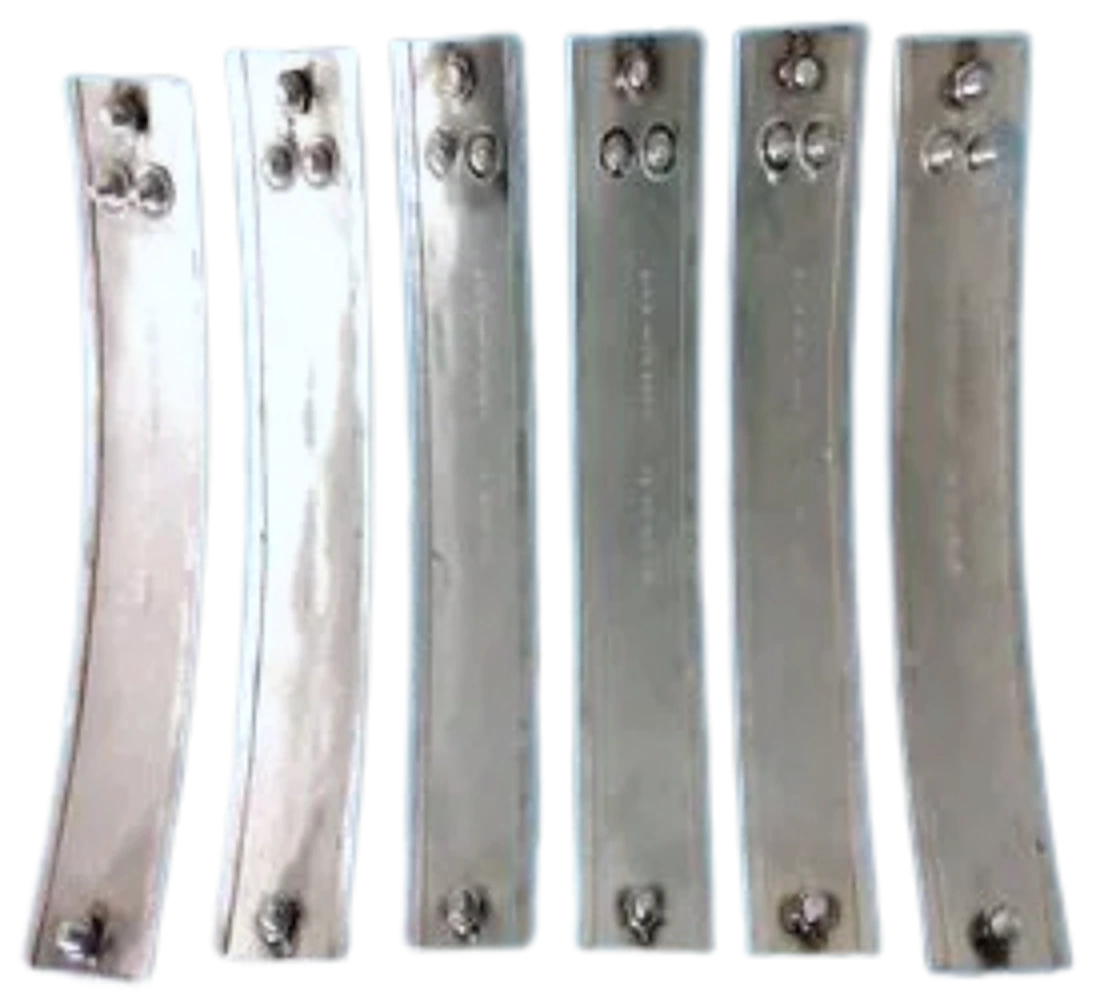
Construction
How a mica strip heater is built
A flat element is a stack: the winding, the insulation either side of it, and the casing that holds the whole thing together.
Resistance winding
— wire or ribbon wound across a mica core and pitched for the wattage over the heated length
Mica insulation
— sheets either side of the winding, which insulate electrically while letting heat through to the casing
Metal casing
— the outer sheet that holds the stack and carries heat to the surface it is mounted against
Terminals
— studs or leads, positioned at the end or the side to suit how the heater is wired in the enclosure
Mounting
— fixing holes, brackets or standoffs, made to match the panel it is going into
Unheated margins
— cool sections at the ends so terminals and fixings are not sitting on the hot part
Made to order
Made to sample
Anti-condensation
Repeat batches
Selection
How to specify a panel heater
Anti-condensation heating is a small load doing a specific job. Oversizing it causes as many problems as leaving it out.
Enclosure size and where it lives
— a panel in a conditioned room and one on an open deck face very different swings between night and day. What you are preventing is the surface temperature dropping to where moisture forms.
Do not oversize
— a heater far larger than the enclosure needs will cook the very insulation it is there to protect, and bake nearby components. Small and continuous beats large and intermittent.
Position
— low in the enclosure, so warm air rises through it, and clear of cabling and components that should not be heated directly.
Length, width and thickness
— set by the space available on the mounting surface or the rail it is fixed to.
Terminal position
— which end or side the connections come out, so the wiring runs sensibly inside the panel.
Control
— a thermostat or hygrostat so the heater runs only when it is needed, rather than continuously all year.
Applications
Where mica strip heaters are used
Switchgear and control panels, motor terminal boxes, generator and alternator enclosures, instrument cabinets, and any electrical enclosure exposed to Gulf humidity or to the day-to-night temperature swing that forms condensation.
They also serve as small surface and platen heaters where a flat element is easier to mount than a round one — heated plates, small dies and warming surfaces.
Anti-condensation heating in switchgear and control panels
Motor terminal boxes and generator enclosures
Instrument and control cabinets
Marine and offshore electrical enclosures
Small platen and surface heating
Replacements made from the failed heater
Marine
Offshore
Industrial plant
Facilities
Utilities
Quotation
What to send with your enquiry
A photograph of the old heater against a rule, plus the panel it came out of, is usually enough.
Length, width and thickness, and the space available to mount it
Supply voltage and wattage
Terminal type and position
Fixing arrangement — holes, brackets or rail mounting
Where the enclosure is installed, and whether it is indoors or exposed
Whether a thermostat or hygrostat is fitted or required
Photographs of the failed heater and the enclosure
FAQs
Mica strip heater questions
Related
Related manufacturing
The panels these heaters go into, and other element types.
Request a quote
Most panels need less heat than people expect
A photograph of the old heater against a rule is usually enough to match it. Workshop at Al Sajaa Industrial Area in Sharjah; we attend across Dubai and Sharjah.