Manufacturing
Hot water calorifiers, manufactured in Sharjah
Calorifiers built from 300 to 5000 litres in stainless steel or copper, to your drawing, a sample or a written requirement — with the heat exchanger arrangement, connection positions and mounting set around the plant room you actually have.
Home › Services › Heating Elements › Hot Water Calorifiers
The product
What is a hot water calorifier?
A hot water calorifier is an insulated vessel that heats water and stores it, so a building or a vessel can draw more hot water at once than the heat source could supply in real time. Heat reaches the stored water either from a coil carrying steam or hot water from a boiler, or from an electric immersion heater fitted into the shell, or from both.
The word describes the combination, not just the tank. A storage cylinder holds water; a calorifier holds it and heats it, through a heat exchanger sized for the recovery the building needs. That is why hotels, accommodation blocks, laundries, commercial kitchens and vessels use them where a simple water heater would run out during a peak.
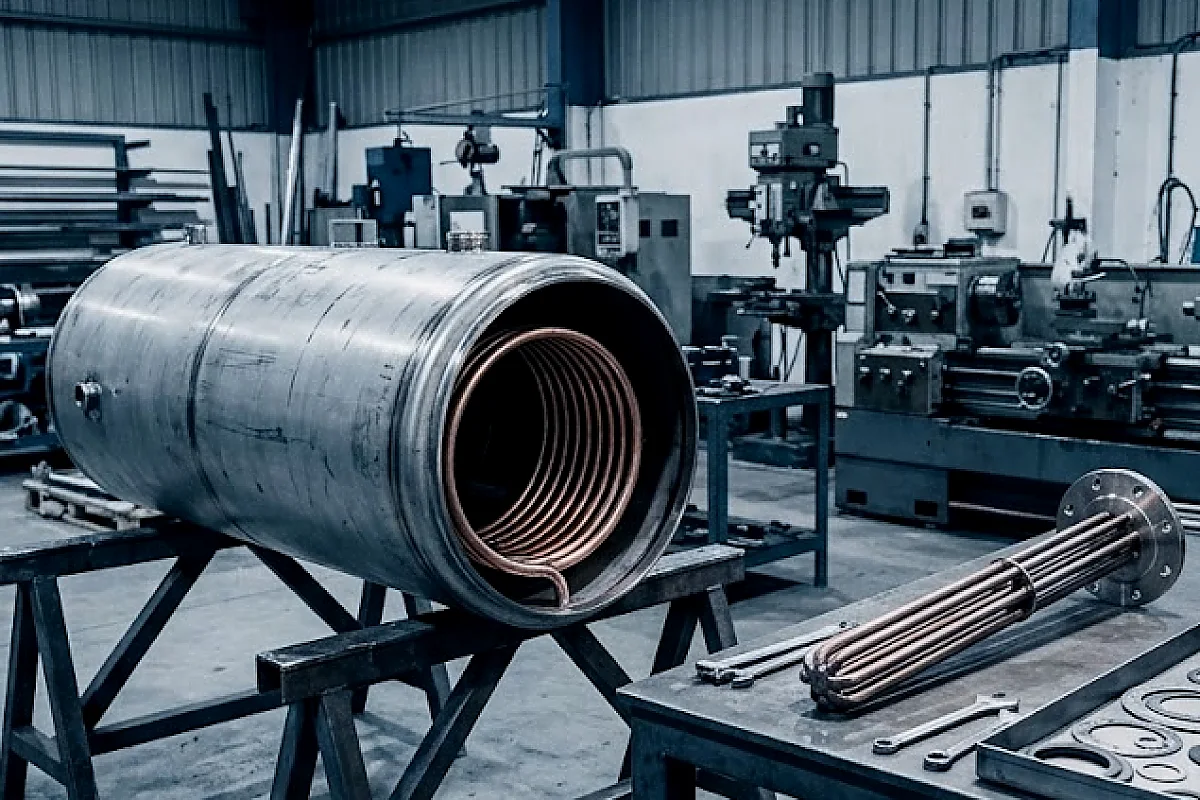
We manufacture them from 300 to 5000 litres in stainless steel or copper, to a customer drawing, to a sample, or to a written requirement. The heat exchanger arrangement is set around your heat source, and the connections and mounting are set around the space the unit has to go into — which is the part a catalogue vessel cannot do.
How it works
How a calorifier works, and what it is made of
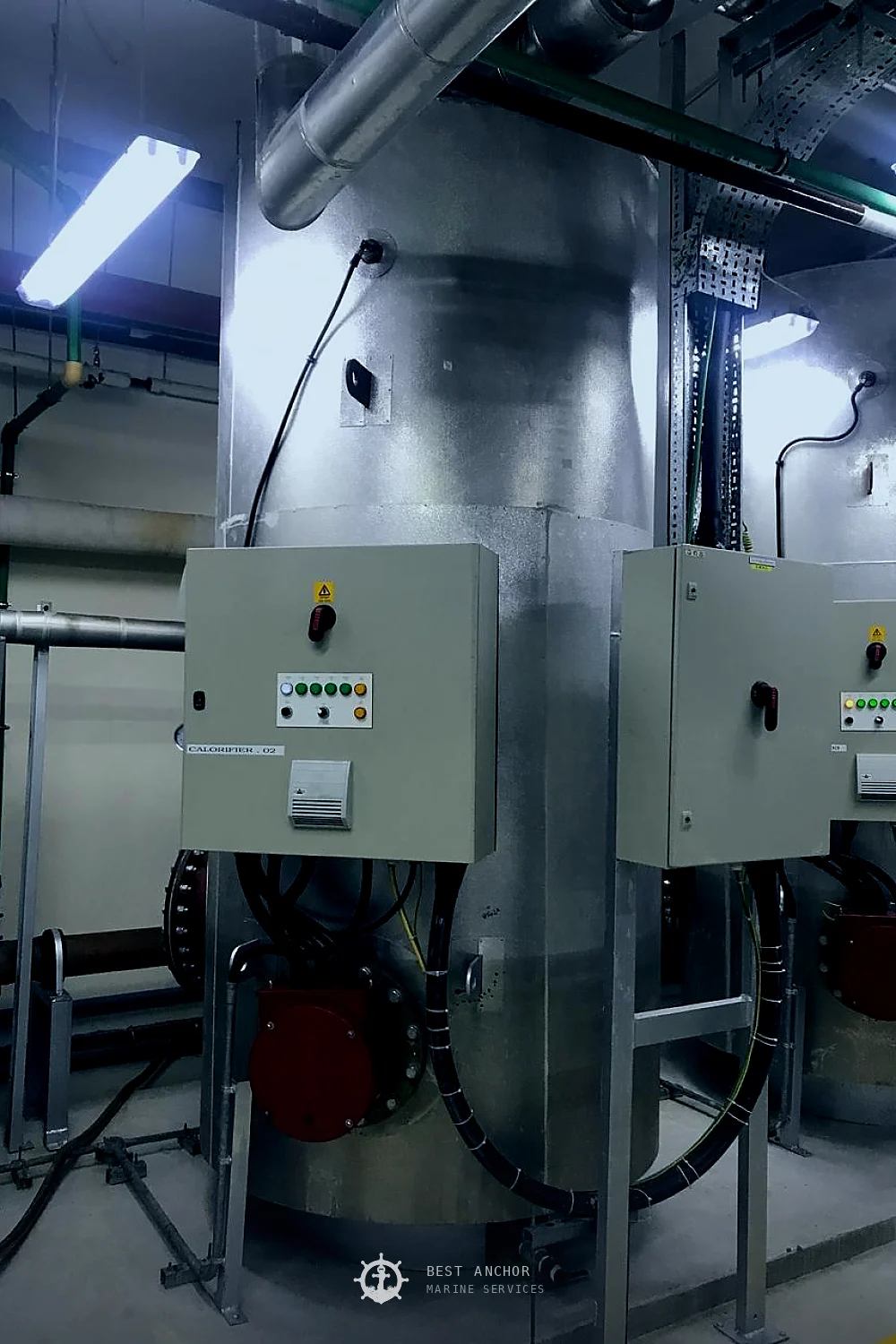
Heat goes in through a coil or an immersion element, the insulated shell holds the result, and the control gear decides when heating runs. Every part below is specified against the duty rather than taken from a standard size.
Shell
— the insulated storage vessel, manufactured in stainless steel or copper, from 300 to 5000 litres
Heat exchanger
— the coil that carries the primary medium, steam or hot water from a boiler, arranged for the recovery rate the building needs
Electric heating
— a flanged or screw plug immersion element fitted into the shell, used on its own or alongside a coil as a backup and summer duty
Connections
— cold feed, hot draw-off, secondary return, drain and vent, positioned to suit the pipework already in the plant room
Insulation and cladding
— to hold the stored heat once the heating stops
Control and protection
— thermostat, sensor pockets and the switching that runs the heat source, with an independent over-temperature cut-out where the duty calls for one
300–5000 litres
Stainless steel or copper
To drawing
To sample
Electric or coil heated
Selection
Direct, indirect and storage — which type you need
Calorifiers are described in a few different ways, and the words get used loosely. These are the distinctions that actually change what gets built.
Indirect calorifier
— the heating medium stays inside a coil and never touches the stored water. This is what potable hot water needs, which is why it is the usual arrangement for hotels, accommodation and anywhere the water is drunk or washed in.
Direct calorifier
— the heat goes straight into the stored water, typically by an electric immersion element in the shell. Simple, and common where there is no boiler to work from.
Storage calorifier
— describes the duty rather than the heating method: a large volume held ready so the building can meet a peak draw that the heat source alone could not.
Calorifier or water heater?
— a water heater generally heats water as it passes through. A calorifier heats and stores it. If your demand comes in bursts, as it does at a hotel breakfast or a laundry shift change, storage is what carries you through.
Sizing
— driven by peak draw and how fast the vessel has to recover, not by the number of outlets. Tell us the building and the pattern of use and we will work through it with you.
Space and access
— a plant room with a narrow door or a low ceiling constrains the shape before anything else does. Manufacturing to the space is usually cheaper than altering the building.
Applications
Where our calorifiers are installed
The demand is the same wherever hot water arrives in bursts rather than steadily: hotels and accommodation blocks, laundries and commercial kitchens, vessels and offshore accommodation, and plant rooms serving buildings across Dubai and Sharjah.
A large part of the work is replacement. A calorifier that has failed in a running building has to fit the space, the pipework and the access that already exist — so it is manufactured to the connections you have rather than to a catalogue drawing that would mean re-piping the plant room.
Hotels, accommodation blocks and staff housing
Laundries and commercial kitchens
Vessels, accommodation barges and offshore installations
Building plant rooms and district hot water systems
Industrial process hot water
Like-for-like replacements where the original unit is no longer available
Hotels
Marine
Offshore
Laundries
HVAC
Facilities
Quotation
What to send with a calorifier enquiry
A drawing answers most of this at once. Without one, the list below is enough for us to come back with a specification and a price — and if a stock unit would genuinely serve you better, we will say so.
Capacity required, or the building and its pattern of hot water use
Heat source — steam, hot water from a boiler, electric, or a combination
Coil arrangement, if you already know what the system needs
Connection positions and sizes, and which side the pipework comes in on
Mounting — vertical or horizontal, floor standing or supported
Space and access constraints, including door widths and ceiling height
Material preference, stainless steel or copper
Photographs of the existing unit and its nameplate if this is a replacement
FAQs
Hot water calorifier questions
Related
Related manufacturing
The elements that go inside a calorifier, and the control gear that runs it.
Request a quote
How much hot water, and how fast?
Tell us the capacity, the heat source and the space it has to fit, and we will come back with a specification and a price. Workshop at Al Sajaa Industrial Area in Sharjah; we attend across Dubai and Sharjah.