Heating elements
Flanged immersion heaters, manufactured to your specification
Bolted-flange immersion heaters made in our Sharjah workshop for tanks, calorifiers, pressure vessels and process lines. Built to the duty, the flange you already have and the medium being heated — or copied from the element that failed.
Home › Services › Heating Elements › Flange Immersion Heaters
The product
What is a flanged immersion heater?
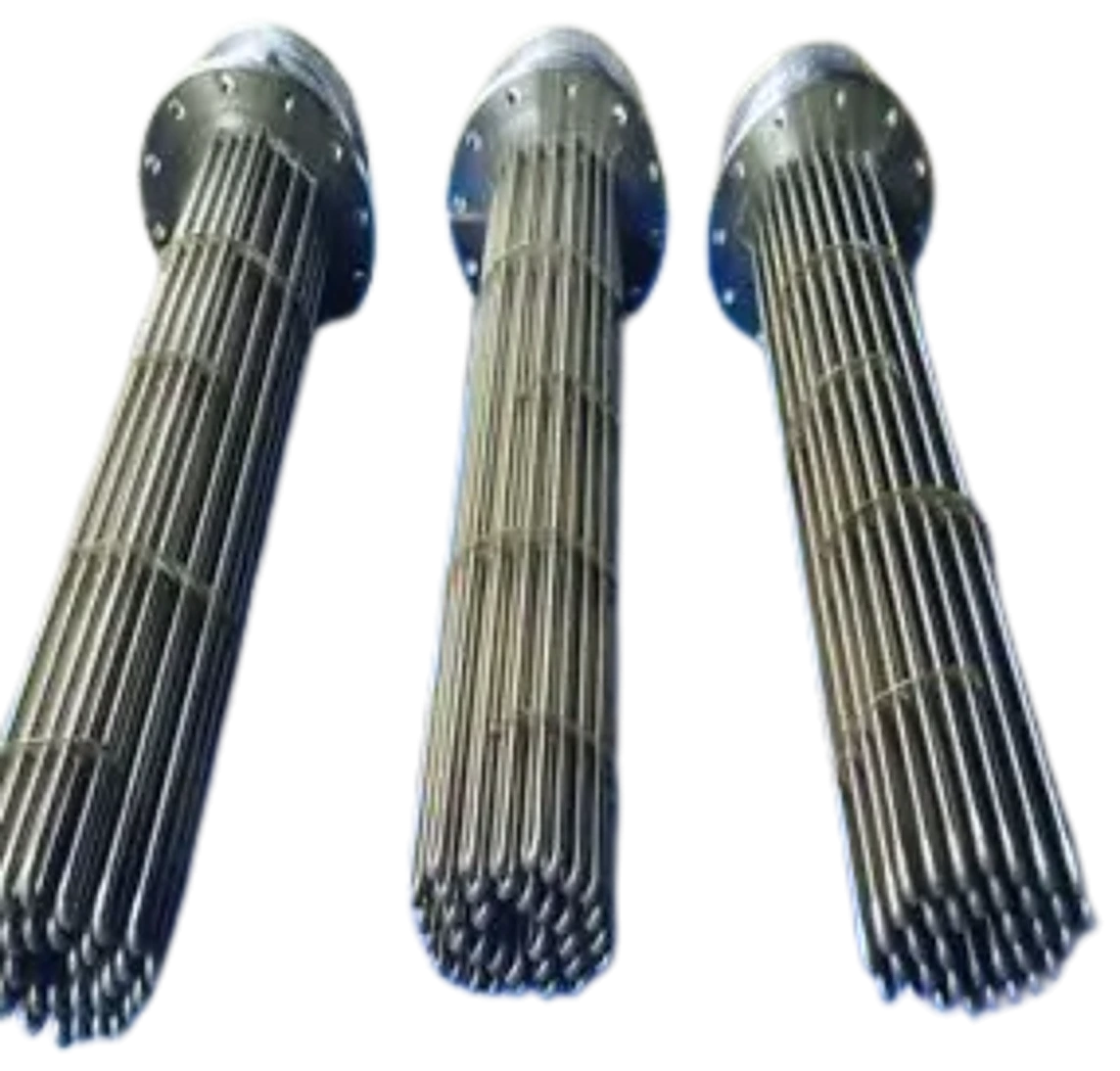
A flanged immersion heater is a bundle of tubular heating elements brazed or welded into a mounting flange, which bolts to a matching flange on a tank or vessel so the elements sit directly in the liquid being heated. Because the heat is generated inside the fluid rather than through a vessel wall, almost all of it reaches the medium.
The flange is what separates this from every other immersion mounting. It carries the weight of a long element bundle, it seals against pressure through a gasketed joint, and it can be unbolted so the whole bundle withdraws for cleaning or replacement without cutting into the vessel. That is why flanged units are the normal choice on calorifiers, larger storage tanks and anything that has to be opened for maintenance.
We manufacture these to order. The bundle, the flange drilling, the immersed length, the terminal enclosure and the sheath material are all set by your duty and your existing connection — not by a catalogue size. If you are replacing a failed unit, the old one is the most useful drawing there is.
Not sure which mounting you need? Industrial immersion heaters compares the flanged, screw plug and inline options side by side.
Construction
How a flanged immersion heater is built
The element bundle does the work; the flange, the terminal enclosure and the sheath decide whether it survives the duty. Each part is chosen against the medium, the mounting and how the vessel is actually run.
Element bundle
— tubular elements formed into hairpins and set into the flange, the number and length chosen for the load and the space inside the vessel
Mounting flange
— drilled and faced to match the vessel flange you already have, so the unit bolts straight to the existing connection
Sheath
— selected for the medium, not for the price: water, oil, and aggressive or high-chloride fluids each point at a different material
Terminal enclosure
— a box over the cold ends to keep the connections dry and accessible, specified for where the unit is installed
Cold sections
— unheated lengths where the element passes through the flange, so the seal and the terminals are not sitting on a hot section
Thermostat and sensor pockets
— fitted where the control scheme needs them, including a separate over-temperature cut-out where the duty calls for one
Made to order
Made to sample
Made to drawing
Repeat batches
Selection
How to select a flanged immersion heater
Most early failures are a specification problem rather than a manufacturing one. These are the decisions that actually determine whether an element lasts, and the ones we will ask you about before quoting.
The medium first
— water, thermal oil, fuel oil, a glycol mix and a chemical solution are five different duties. The sheath material follows from this, and nothing else should override it.
Watt density
— the heat each square unit of sheath has to shed. Too high for the medium and the sheath runs hot, the fluid degrades or scales onto it, and the element fails from the inside. A longer, lower-density bundle costs slightly more and lasts considerably longer.
Immersed length against the vessel
— the bundle must stay covered at the lowest working level. An element that is exposed when the tank draws down will fail quickly, whatever it is made of.
The flange you already have
— size, drilling, facing and rating. Matching the existing connection avoids modifying the vessel, which is usually the expensive part of a replacement.
Fluid movement
— a heater in still liquid behaves differently from one in a circulating line. Where there is no natural circulation, the density has to come down.
Control and protection
— what switches the load, where the sensor sits, and whether an independent over-temperature cut-out is needed. We can build the panel alongside the element if you would rather have one supplier for both.
Applications
Where flanged immersion heaters are used
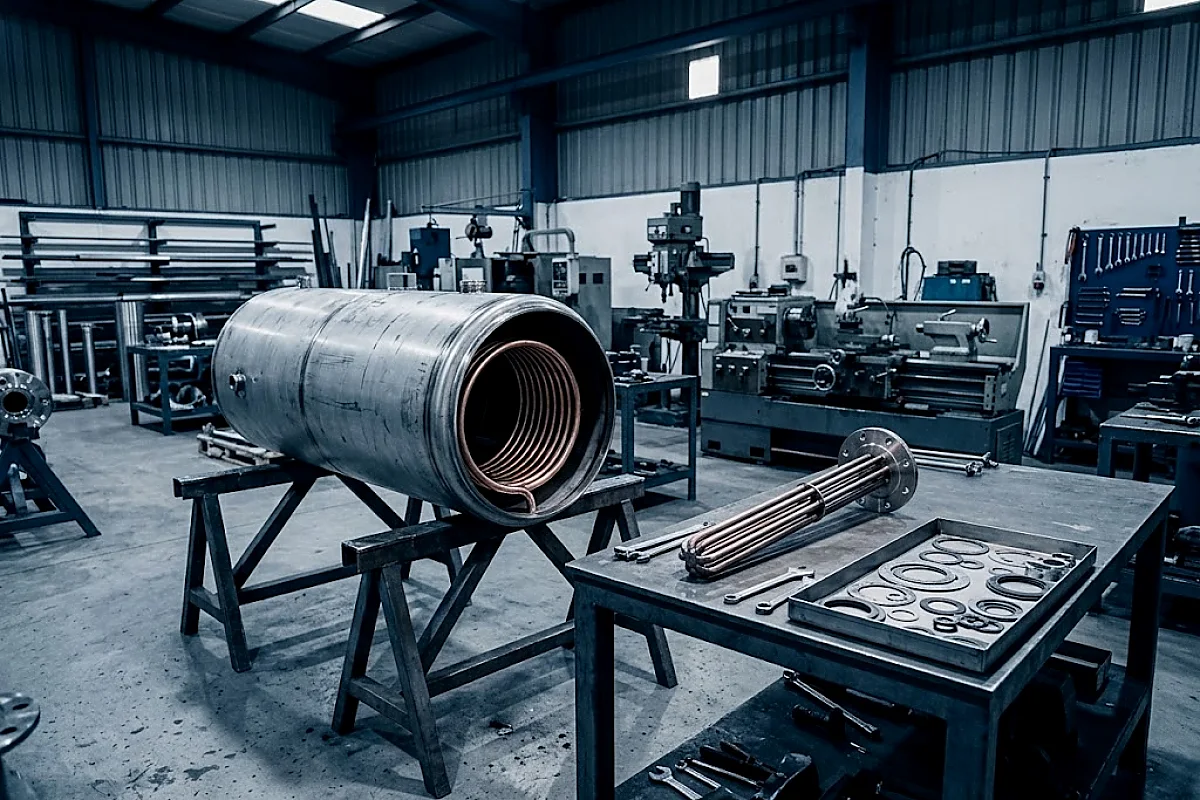
Flanged units go wherever a large heat load has to go into a vessel that will need opening again. On board, that is fuel oil and lubricating oil tanks, water heaters and the calorifiers that supply accommodation. Ashore, it is hot water storage in hotels and buildings, process tanks and plant serving industrial users across Dubai and Sharjah.
The same element also goes into the calorifiers we build, so a vessel and its heating can be quoted together rather than as two separate jobs.
Hot water storage and calorifiers in hotels, accommodation blocks and buildings
Fuel oil and lubricating oil tank heating on vessels and in plant rooms
Process tanks, dip tanks and cleaning baths
Feed water and condensate heating
Thermal fluid and glycol systems
Replacement bundles for existing vessels where the original supplier is no longer available
Marine
Hotels
HVAC
Industrial plant
Offshore
Facilities
Quotation
What to send with your enquiry
The more of this you send at the start, the closer the first reply is to a firm price. A photograph of the failed unit and its nameplate is often enough on its own, and if the work sits outside what we do we will say so rather than pass it along.
Supply voltage, phase and the total load required
Flange size, drilling and facing — or a photograph of the existing flange with a rule across it
Overall length and immersed length, and the depth available inside the vessel
The medium being heated, and its working temperature range
How the vessel is controlled now, and whether a thermostat or cut-out is fitted
Photographs of the failed element, the terminal box and the nameplate if you have one
FAQs
Flanged immersion heater questions
Related
Related heating elements
Other mountings and element types for the same kind of duty.
Request a quote
Photograph the flange with a rule across it
Tell us the load, the flange and what is in the vessel, and we will come back with a specification and a price. Workshop at Al Sajaa Industrial Area in Sharjah; we attend across Dubai and Sharjah.