Heating element manufacturing
Heating Element Manufacturer in the UAE
Custom electric heating elements and hot water calorifiers manufactured to your voltage, wattage, sheath material and mounting — for vessels, hotels, commercial kitchens and industrial plant across Dubai and Sharjah.
The service
Made to the duty, not to the nearest catalogue size
An electric heating element is a resistance coil held in compacted magnesium oxide inside a metal sheath. Everything that decides how long it lasts is chosen at the drawing stage: the watt density spread over the sheath, the sheath material against the medium being heated, the immersed length relative to the working liquid level, and the mounting that has to seal into the equipment. Get those right and the element runs for years. Get them wrong and it burns out at a dry or scaled section long before it should.
We manufacture to order rather than resell from stock — a single replacement for a vessel alongside, a set for a hotel plant room, or repeat batches for kitchen equipment suppliers and maintenance contractors. Work from a drawing, a sample, a specification, or the failed element itself, which is often the most reliable source there is because it carries the true dimensions of the equipment it came out of, including the bends someone made on site years ago.
Because manufacturing sits next to our repair and panel building work, an element is matched to the duty it actually serves instead of being adapted to what a catalogue offers, and the specification is kept so the next one comes off the same drawing rather than starting the search again.
Back to all services →In short
What does a heating element manufacturer do?
A heating element manufacturer makes the electrical elements that heat liquids, air, surfaces and process equipment — built to a specified voltage, wattage, length, sheath material and mounting rather than selected from a catalogue. Elements are made to a drawing, to a sample, or copied from the one that failed.
We manufacture ten element types and hot water calorifiers at our workshop in Sharjah. Each type has its own page below setting out how it is built, how to select one, and what to send us for a quotation.
Elements, calorifiers and panels are manufactured by the same team that overhauls the equipment they go into — see about Best Anchor Marine Services.
Scope of work
Heating element types we manufacture
Ten element forms, each specified by voltage, wattage, sheath material, bend form, immersed length, mounting and termination to suit the equipment it goes into.
Flange immersion heaters
— bolted into tanks, calorifiers and pressure vessels for larger volumes
Screw plug and socket immersion heaters
— into an existing boss on a tank, water heater or pipeline
Spiral tubular immersion heaters
— coiled to spread the load evenly through a vessel
Cartridge heaters
— high watt density inserts for moulds, dies, platens and heated tooling
Finned tubular heaters
— extended surface for duct heating, AHUs, drying rooms and laundries
Air tubular heaters
— straight and formed elements for ovens, warmers and radiant heating
Inline circulation heaters
— pipeline mounted with their own control panel for flowing fluids
Open coil furnace heaters
— exposed resistance coil for fast, high temperature air heating
Mica space heaters
— flat anti-condensation elements for switchgear, panels and enclosures
Hot plates and cooking ranges
— solid plates and galley cooking equipment
Immersion & tubular
Cartridge
Finned & duct
Inline circulation
Furnace & open coil
Mica strip
Hot plates
Calorifiers 300–5000 L
Element range
Ten heating element types, built to your specification
Every element here is manufactured to order — your voltage, wattage, sheath material, bend form and mounting — for vessels, hotels, commercial kitchens and industrial plant across the UAE. Send a drawing, a sample, or the failed element itself.
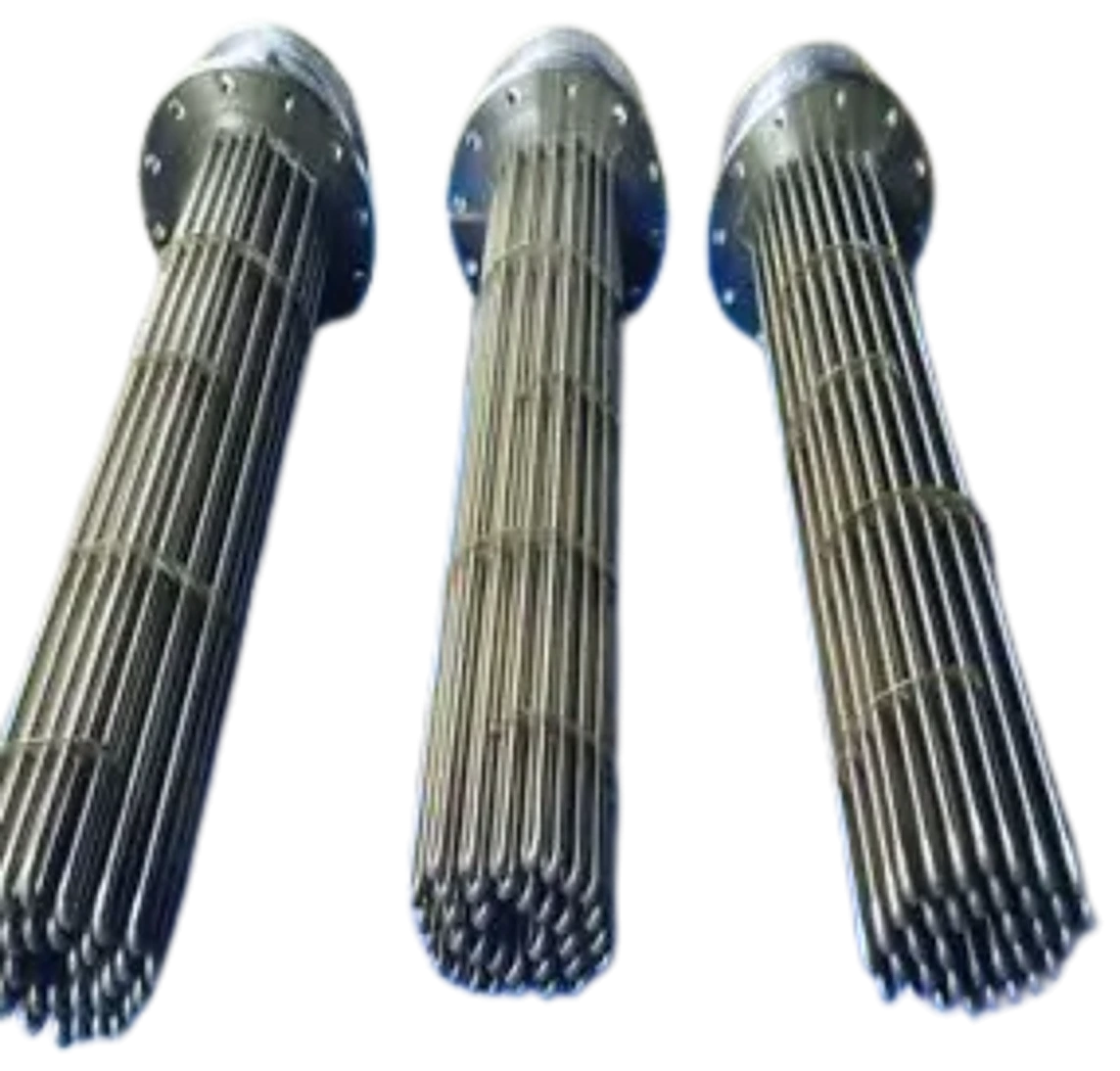
Flange immersion tubular heaters
Bolted into tanks, calorifiers and pressure vessels where the volume is large. Sheath material and flange drilling are specified to the liquid and to the vessel it goes into.
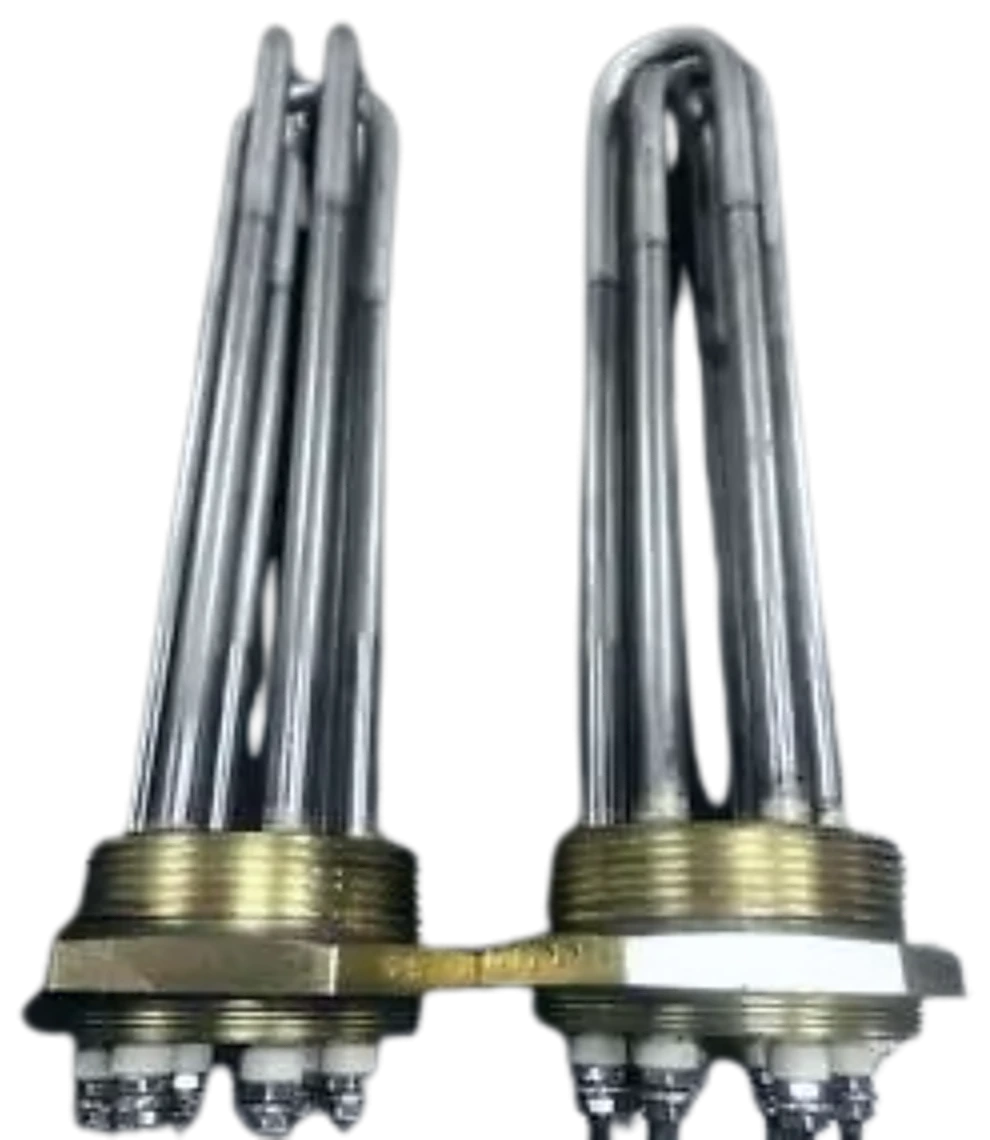
Screw plug immersion heaters
Screwed into an existing boss on a tank, water heater or pipeline — the direct replacement when a plant room or engine room heater burns out.
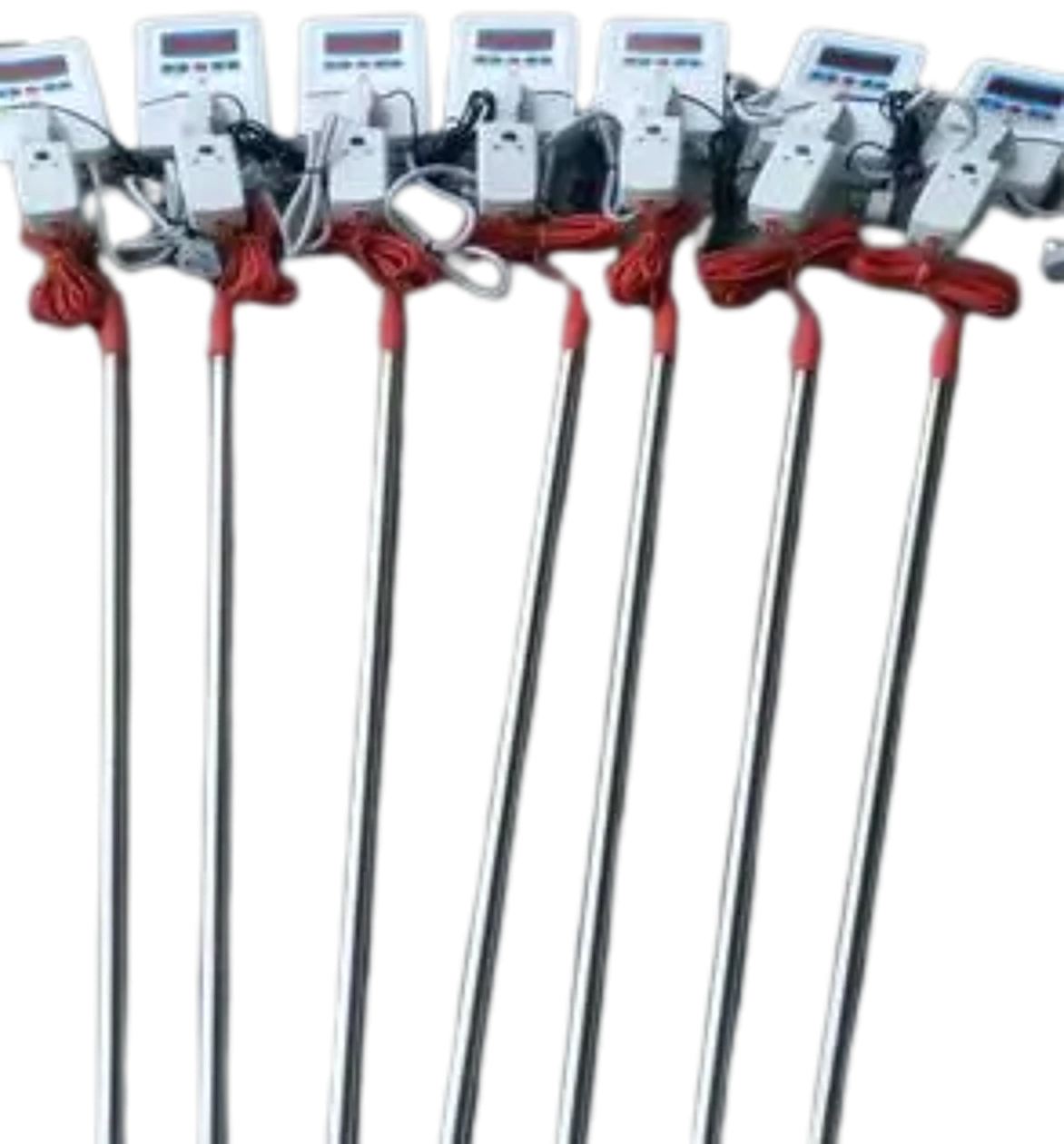
Cartridge heaters
High watt-density inserts for moulds, dies, platens and heated tooling, supplied with the thermostat or controller where the equipment needs one.
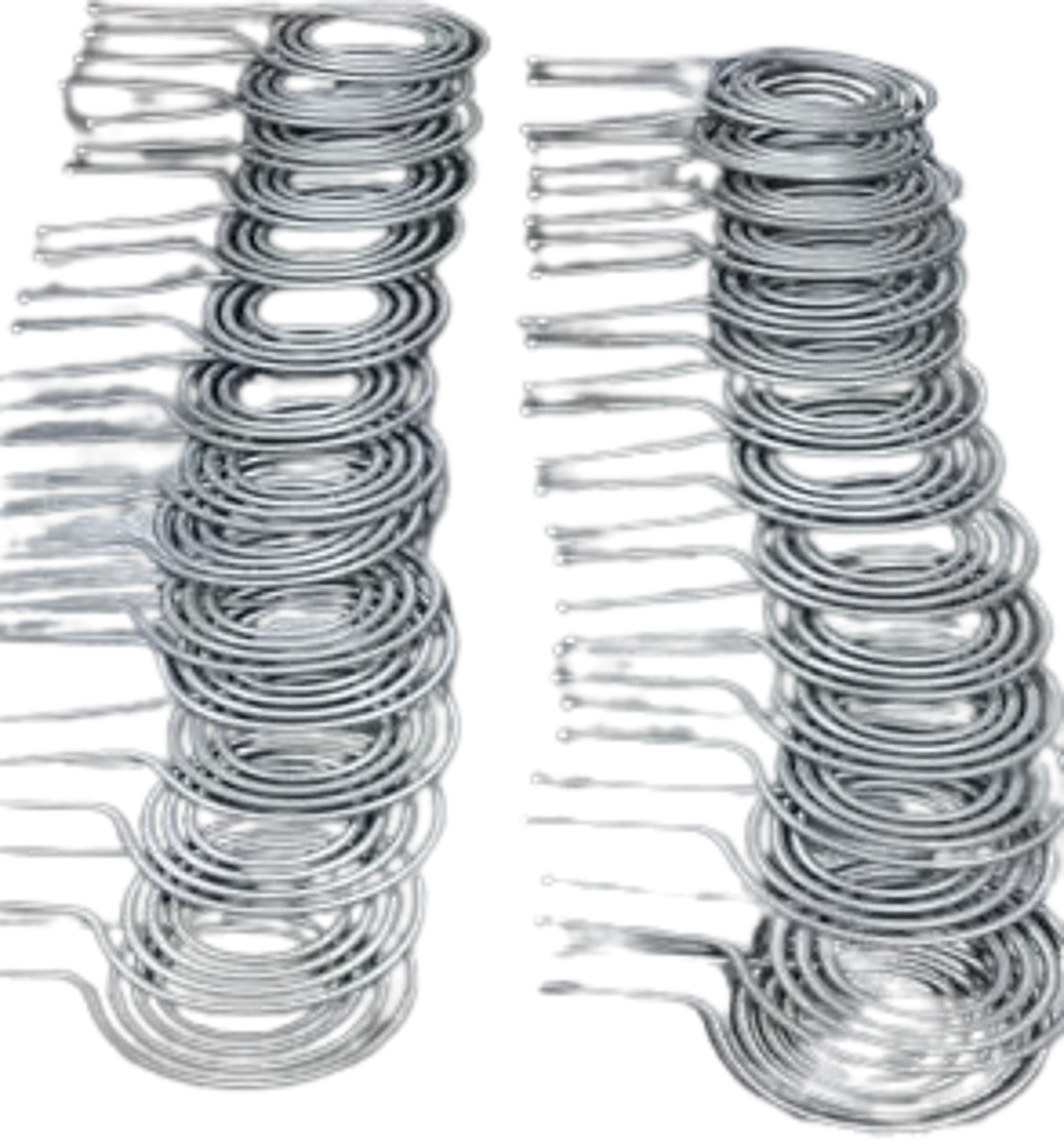
Spiral tubular immersion heaters
Coiled so the heat spreads evenly through a tank, formed to the diameter and immersed depth the vessel actually has.
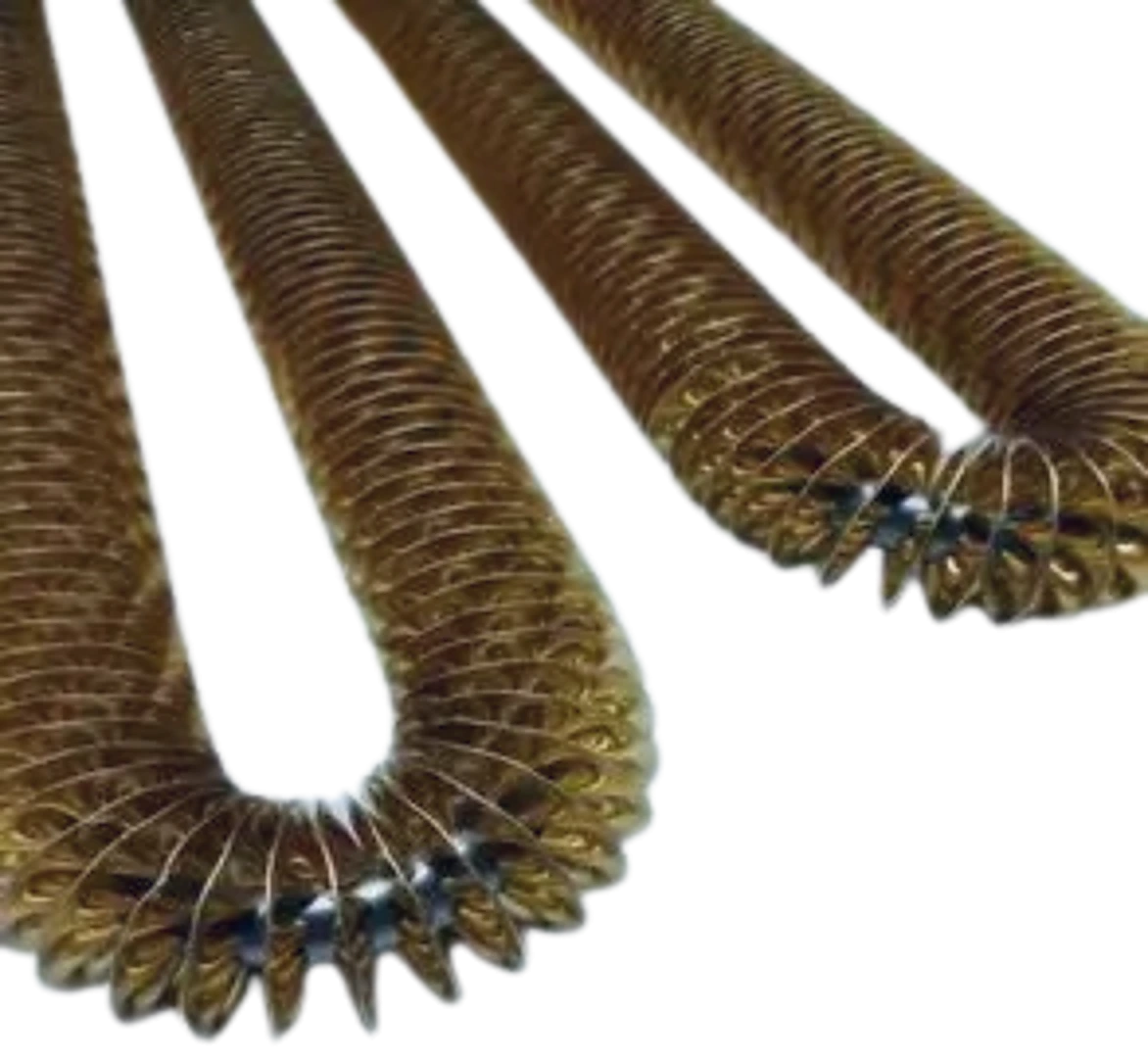
Finned tubular heaters
Fins multiply the surface area against moving air: duct heating, air handling units, drying rooms and hotel laundry equipment.
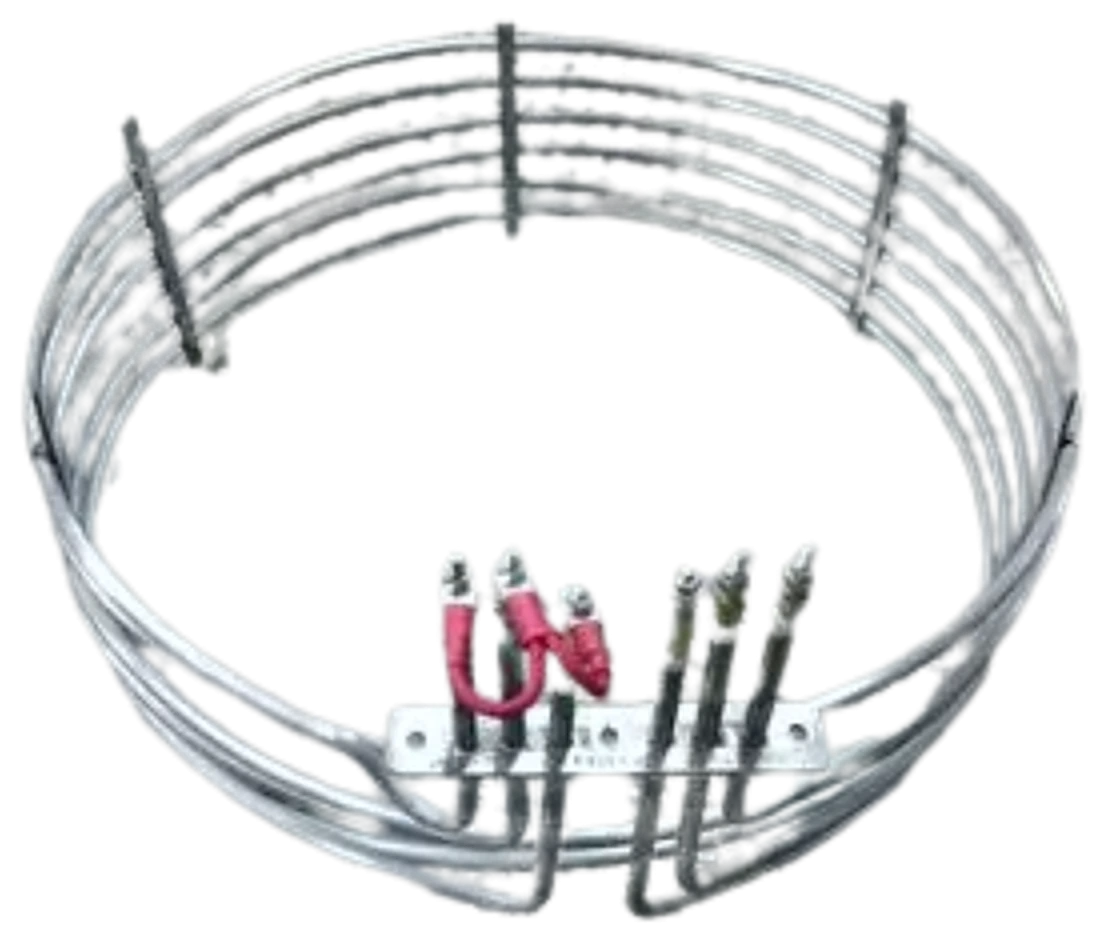
Air tubular heating elements
Straight and formed tubular elements for ovens, warmers, radiant heating and confined-space air heating.
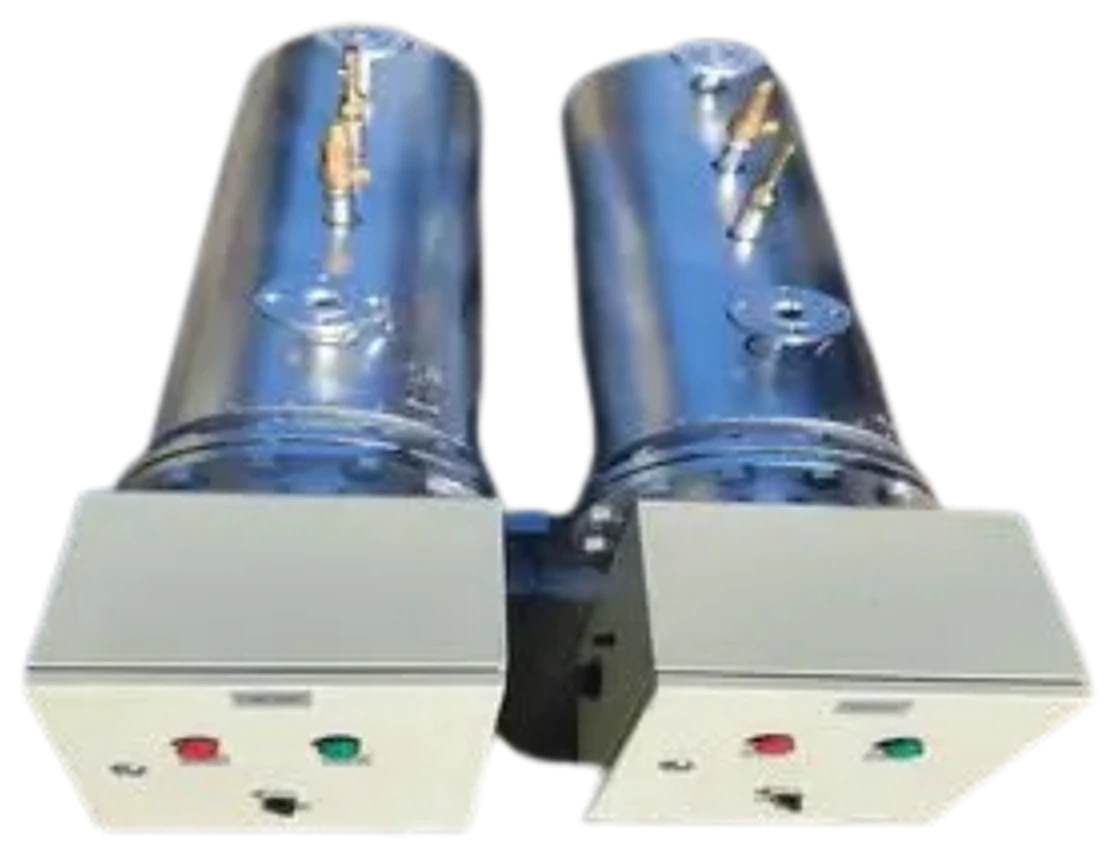
Inline circulation heaters
Pipeline mounted with their own control panel, holding temperature in fuel, oil, water and process lines while the fluid flows.
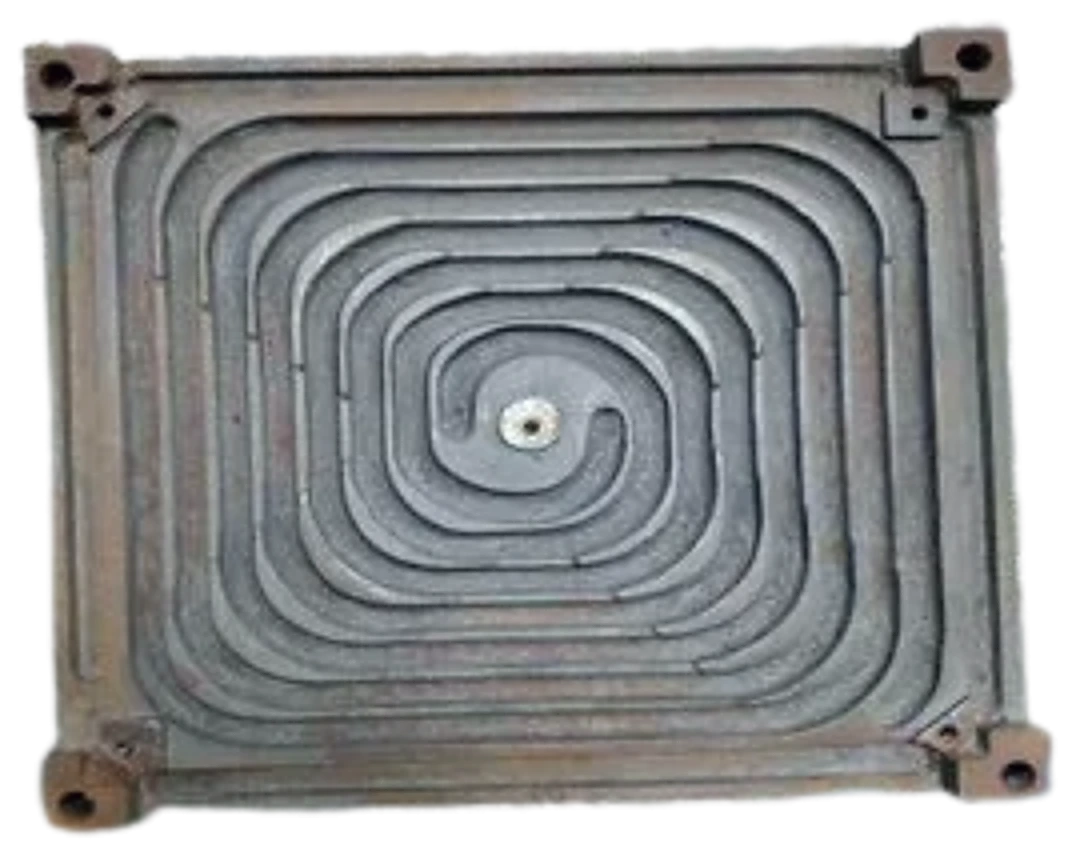
Open coil furnace heaters
Exposed resistance coil for fast, high-temperature air heating in furnaces, ovens and heat treatment equipment.
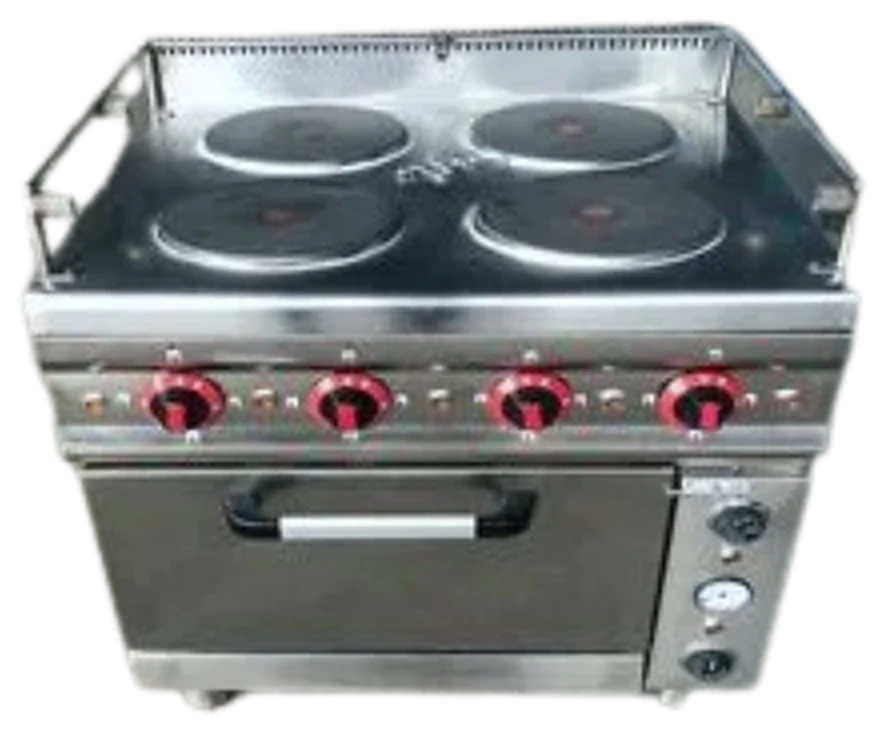
Hot plates & cooking ranges
Solid hot plates, ranges and galley cooking equipment for ships’ galleys, hotel kitchens and staff canteens.
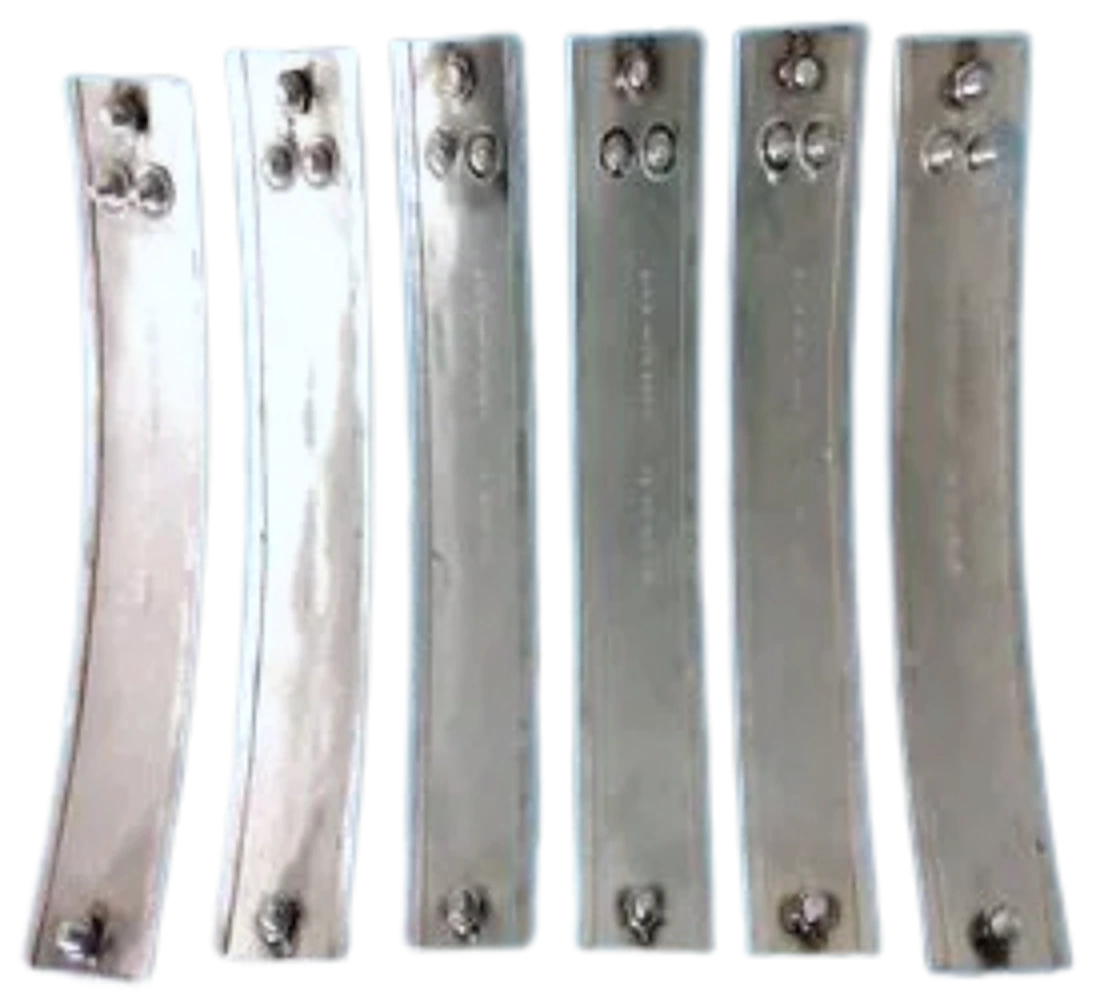
Mica space heaters
Flat mica elements that keep condensation out of switchgear, control panels and enclosures in humid coastal air.
Marine & offshore
Hotels & hospitality
Commercial kitchens
Laundries
HVAC & plant rooms
Industrial process
Water treatment
Element pages
Every element type, in detail
Each type below has its own page setting out how it is built, how to select one and what to send us for a quotation.
Manufacturing capability
10
Element types manufactured to order
300–5000 L
Hot water calorifier capacity range
SS / Cu
Calorifier shells in stainless steel or copper
Built to
Drawing, sample or the failed original
When to call us
When an element is telling you the specification is wrong
A replacement that fails the same way as the last one is a specification problem, not a supply problem. These are the patterns worth looking at before the next order.
Burn-out at one point on the sheath
— scaling, sludge or an element energised above the liquid line
Short life on a repeat replacement
— watt density too high for the medium, or the wrong sheath material
Nuisance tripping on earth fault
— moisture in the terminal end, or a sheath breached by corrosion
Water taking longer to reach temperature
— scaled sheath, failed element in a bank, or a thermostat drifting
Condensation and corrosion inside a panel
— no anti-condensation heater, or one that has failed unnoticed
Discoloured or distorted sheath
— overheating from starvation of flow, or the element run dry on start-up
A calorifier that cannot hold recovery in peak hours
— coil duty or element rating below what the building draws
Cracked mounting or leaking flange
— gasket, boss or flange drilling mismatch at the last change
How the work runs
From specification to a finished, tested element
Manufacturing is straightforward once the specification is complete. Most of the engineering time goes into confirming it, because that is where element life is decided.
01
Specification review
We work from your drawing, sample, written requirement or the failed element, confirming voltage, phase, wattage, overall and immersed length, sheath diameter, bend form, mounting and termination.
02
Material and watt density
Sheath material is chosen for the medium and its working temperature, and watt density is set so the element is not asked to run harder than the application will support.
03
Manufacture
The element is formed, filled and compacted, then terminated and sealed to suit the mounting and the environment it will work in — including the moisture and salt that end many terminal ends in this region.
04
Testing
Elements are function tested before despatch. Where the element forms part of a calorifier or a heating circuit we build, it is tested as an assembly with its control.
05
Repeat supply
The specification is kept on file, so replacements and spares come off the same drawing instead of being worked out from scratch under pressure.
Applications
Hot water calorifiers, manufactured to requirement
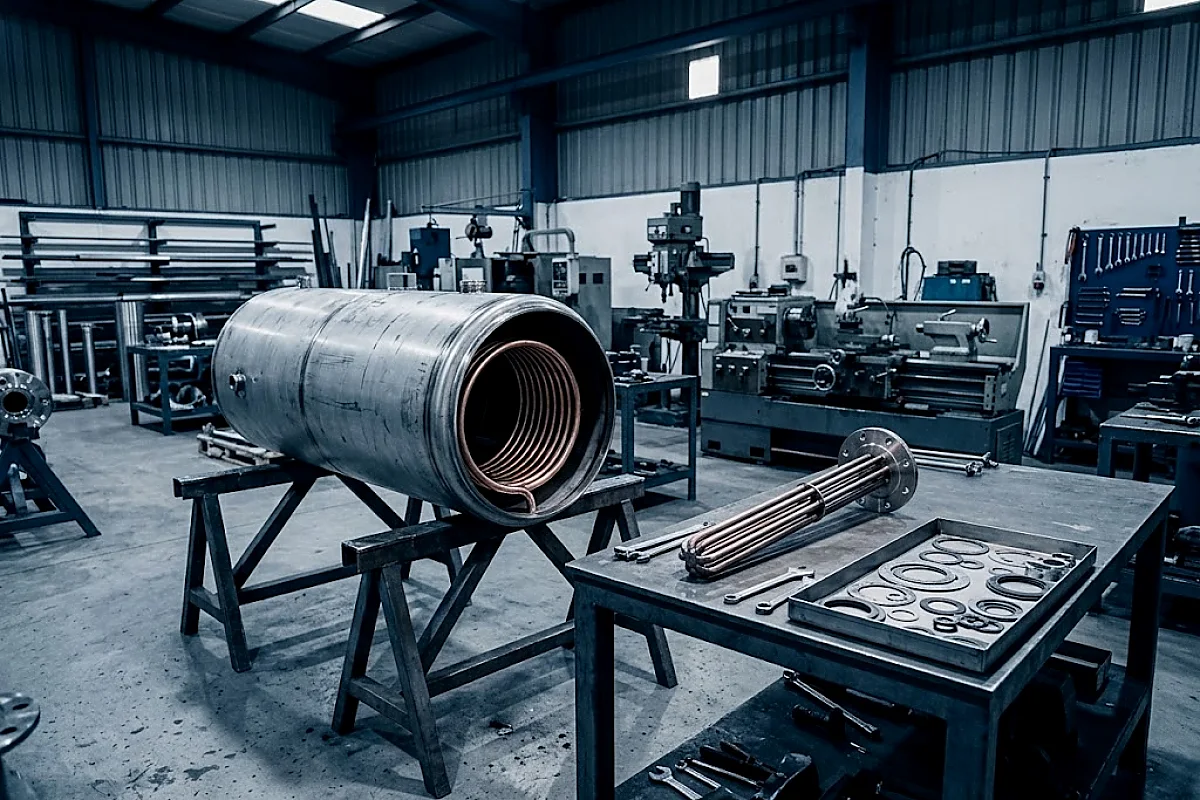
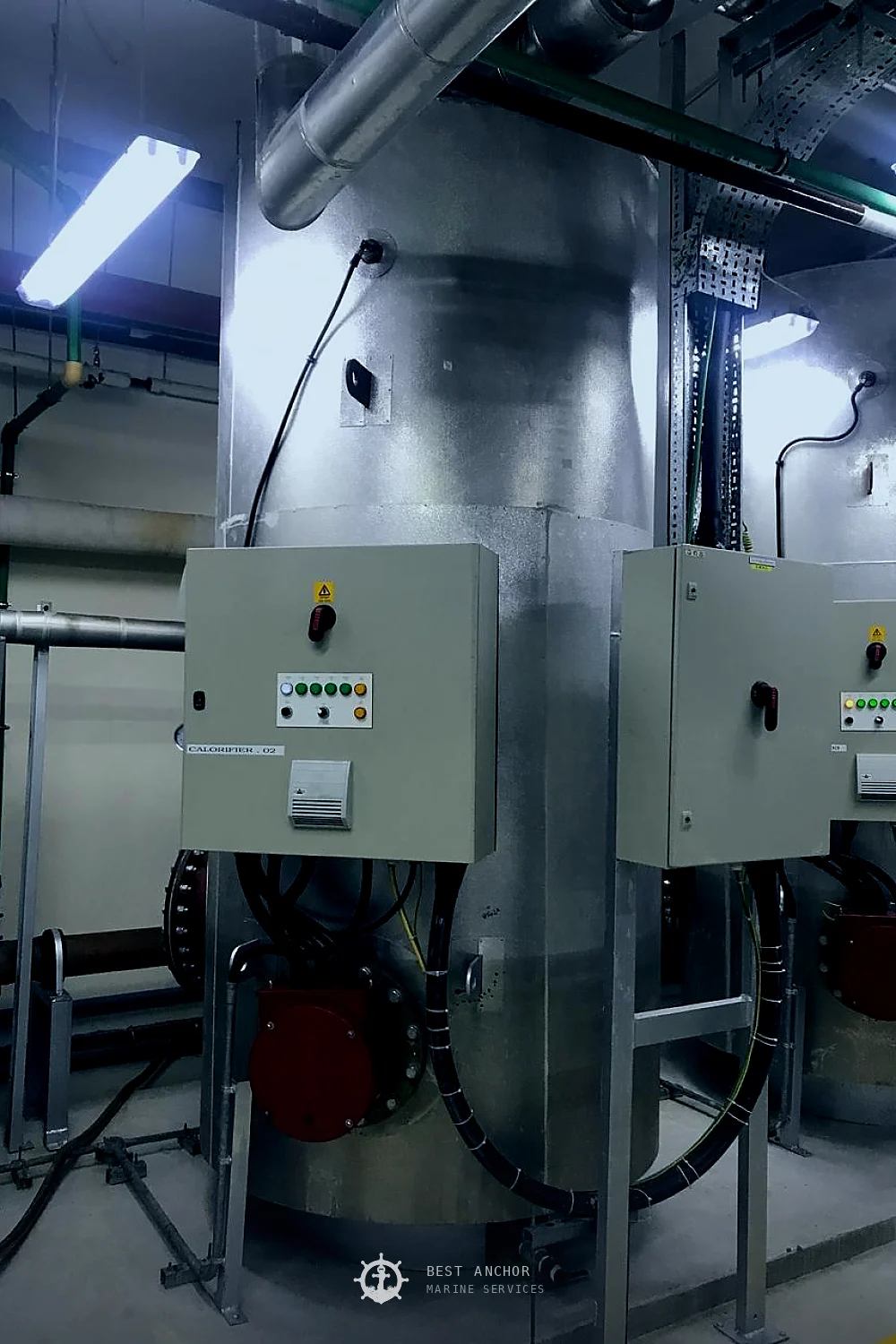
A calorifier is a storage vessel that heats water indirectly through one or more heat exchanger coils fed from a boiler, engine jacket water or steam, usually with an electric immersion element as the standby or secondary source. It is the part of a hot water system that has to fit the building or the vessel around it — capacity, coil duty, connection positions, mounting, insulation and control — which is exactly what a catalogue unit cannot do.
We manufacture calorifiers from 300 to 5000 litres for marine, hotel, commercial and industrial use, in stainless steel or copper, to customer drawing, to a sample, or to a written requirement where the duty is known but the design is not. Vessels are insulated and fitted with temperature control and pressure relief, and because the immersion elements are manufactured here too, the heating side is matched to the vessel rather than adapted to it.
Hotels, laundries and commercial kitchens are a large part of this work: peak-hour recovery, not storage volume alone, is usually what decides whether a hot water system copes. Where the circuit also needs control gear, the temperature control and switchgear panels are built by the same team.
Hot water systems
— storage water heaters, calorifiers, hotel plant rooms, tanks and vessels
Marine
— fuel oil and HFO tank heating, calorifiers, galley equipment and engine room services
Hotel & commercial kitchens
— bain-maries, fryers, ovens, grills, warmers, dishwashers and laundries
Industrial plant
— ovens and furnaces, duct and air heating, mould, die and process heating
Panels and enclosures
— anti-condensation heating in switchgear and control cabinets
Hotels & hospitality
Commercial kitchens
Laundries
Ship owners & managers
HVAC contractors
Industrial plant
Equipment suppliers
Before you enquire
What to send with an element or calorifier enquiry
The more of this you can send at the start, the closer the first reply is to a firm price. A photograph of the old element with a tape measure against it covers a surprising amount of it.
Electrical
— voltage, phase and wattage, and whether it replaces one element or a bank
Dimensions
— overall and immersed length, sheath diameter, bend form or a sketch
Mounting and termination
— flange, socket or screw plug with thread or flange size, and the terminal arrangement
Medium and temperature
— water, oil, fuel, chemical or air, and the working temperature
Calorifiers
— capacity, heat source, coil arrangement, connection positions, mounting and any drawing you hold
FAQs
Heating element and calorifier questions
Related services
Work that often runs alongside this
Heating work usually arrives with a control panel, a vessel or a fabricated mounting attached to it. These are the services quoted alongside it most often.
Request a quote
We can work from the element that failed
We will confirm what can be manufactured, what it costs, and what is still needed to build it right the first time. Send the details and we will come back with a specification you can check.