
Heating elements
Furnace and open coil heating elements
Open coil resistance elements wound and formed in Sharjah for furnaces, kilns and heat treatment equipment — made to the chamber, the former and the terminal arrangement you already have.
Home › Services › Heating Elements › Furnace Heating Elements
The product
What is an open coil furnace element?
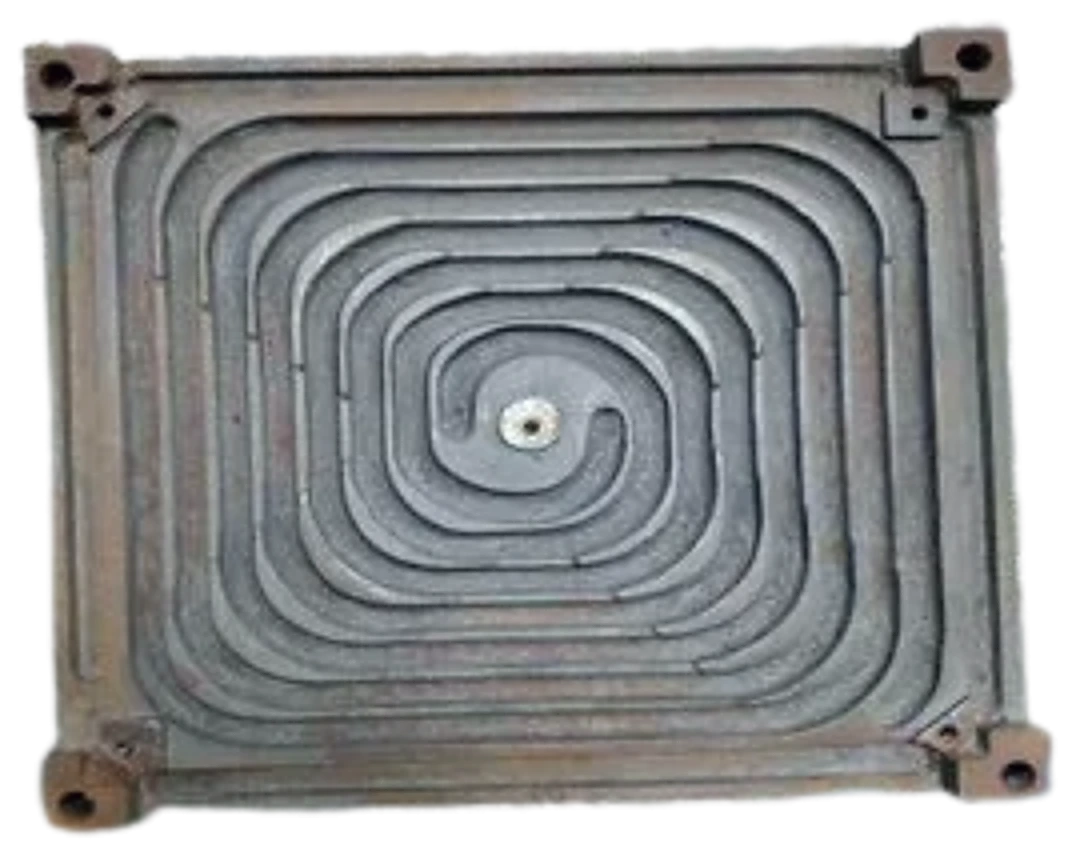
An open coil element is resistance wire wound into a spiral and supported in the wall or floor of a furnace chamber, usually in a ceramic or refractory former. Unlike a tubular element, the wire is not enclosed in a sheath — it radiates heat directly into the chamber.
That is what makes it suit furnace work. Without a sheath and the packing inside it, there is less material between the hot wire and the load, so the element responds quickly and can work at the kind of temperatures a heat treatment chamber needs. The trade-off is that the coil is exposed, so it depends on its supports and on what the chamber atmosphere does to it.
We wind and form these to order: the coil pitch and diameter, the overall length, how the coil is supported, and the terminal arrangement where it passes out through the furnace wall. In most cases the old element and the chamber it came out of are the specification.
Construction
How a furnace element is made
A wound coil, the supports that hold its shape, and the terminations that get the current in and out through a hot wall.
Resistance wire
— the grade and gauge chosen for the duty and the chamber atmosphere
Coil pitch and diameter
— how tightly the wire is wound, which sets how the load is spread along the element
Form
— flat spiral, helical, or wound to the shape of the chamber wall, hearth or muffle
Supports
— ceramic formers, tubes or hooks that hold the coil clear of the lining and stop it sagging in service
Terminations
— the cold tails and connections where the element passes out through the furnace wall
Layout
— how elements are distributed around the chamber so the heat reaches the load evenly
Wound to order
Made to sample
Formed to the chamber
Repeat batches
Selection
How to specify a furnace element
Furnace elements are nearly always replacements, and the chamber decides most of the answer. These are the details that matter.
The old element
— the most reliable specification there is. Send it, or photograph it in place before removing it, because how it sat in the chamber matters as much as its dimensions.
Chamber dimensions and layout
— where the elements sit, how many there are, and how they are distributed around the load.
Supports and formers
— what holds the coil, and whether those parts are being reused or need making as well.
Terminal arrangement
— where the tails pass through the wall and how they connect outside, which has to match the existing furnace.
Atmosphere
— what is in the chamber during a cycle. It bears on wire selection more than most people expect.
How it failed
— an element that sagged, one that burned through at a support and one that failed at a terminal each point at a different cause, and a like-for-like replacement will repeat it.
Applications
Where furnace elements are used
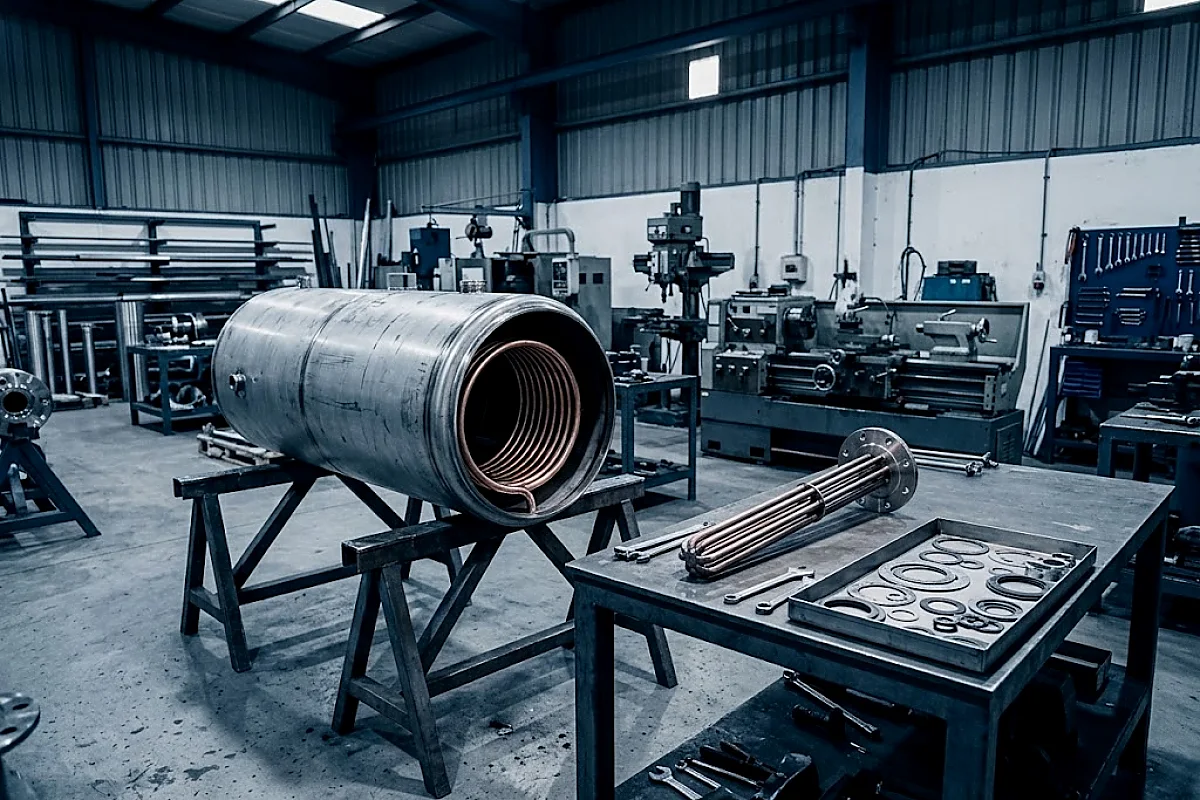
Heat treatment furnaces, annealing and tempering ovens, laboratory and muffle furnaces, kilns, and industrial process heating chambers in plant across Dubai and Sharjah.
Most of this work is keeping older equipment running where the original manufacturer no longer supplies parts. Winding to the original specification is usually far quicker than sourcing a replacement furnace.
Heat treatment, annealing and tempering furnaces
Muffle and laboratory furnaces
Kilns and firing chambers
Industrial process heating chambers
Obsolete elements rewound from the original
Repeat batches for furnaces with several identical elements
Heat treatment
Manufacturing
Laboratories
Industrial plant
Quotation
What to send with your enquiry
A photograph of the element in the chamber before it comes out is worth more than any written description. Add these and we can wind a matching set.
The failed element, or photographs of it in place with a rule for scale
Supply voltage and the load per element
Chamber dimensions and how many elements it carries
Coil diameter, wound length and overall length
How the coil is supported, and whether formers are being reused
Terminal arrangement and where the tails exit
What the furnace is used for, and what atmosphere is in the chamber
FAQs
Furnace element questions
Related
Related heating elements
Other element types for high temperature and process heating.
Request a quote
Photograph it before you take it out
We will wind a matching set to the original pitch, length and terminal arrangement. Workshop at Al Sajaa Industrial Area in Sharjah; we attend across Dubai and Sharjah.