
Heating elements
Inline circulation heaters, built around your flow
Heaters that warm fluid as it passes through them, manufactured in Sharjah as a complete assembly — vessel, element bundle, insulation and controls — sized to your flow rate and connections.
Home › Services › Heating Elements › Inline Circulation Heaters
The product
What is an inline circulation heater?
An inline circulation heater is a heated section of pipework. Fluid enters at one end, passes over an immersion element bundle inside an insulated vessel, and leaves at the other end hotter than it went in. Nothing is stored — the heat goes in while the fluid is moving through.
That is what separates it from a tank heater or a calorifier. A calorifier heats a volume and holds it ready. A circulation heater heats what is passing at that moment, which suits fuel oil on its way to an engine or a burner, water on a circulating loop, or thermal fluid and glycol in a closed system.
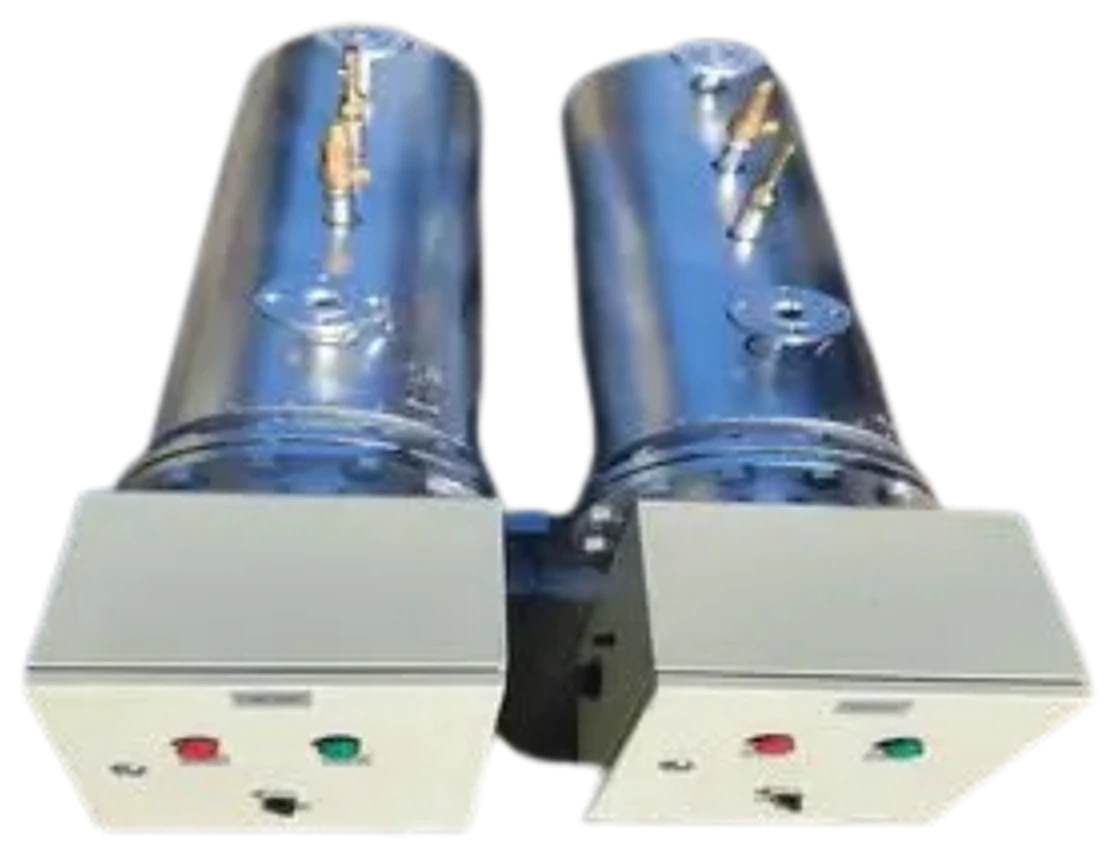
We manufacture them as complete assemblies: the vessel, the element bundle, the connections, the insulation and the control and protection. Because it is made rather than selected, the connection sizes, the orientation and the mounting can suit the pipework you already have.
Construction
How a circulation heater is built
The assembly is a vessel, an element bundle and the control gear that keeps them safe. Each part is specified around the fluid and the flow.
Vessel
— the heated section the fluid passes through, with inlet and outlet positioned to suit the run of pipework
Element bundle
— an immersion bundle set into the vessel through a flanged or threaded mounting, so it can be withdrawn for cleaning
Baffling and flow path
— arranged so the fluid passes over the elements rather than finding a route around them
Insulation and cladding
— to keep the heat in the fluid rather than in the plant room
Sensor pockets
— for the control sensor and, separately, for over-temperature protection
Control and protection
— switching, temperature control and a means of preventing the heater energising without flow
Made to order
Flanged or threaded connections
Insulated
Panel built alongside
Selection
How to select a circulation heater
Everything here follows from the flow. An element that is comfortable at full flow is in trouble the moment the pump stops.
Flow rate
— how much fluid passes per unit of time. This, with the temperature rise you need, determines the load before any other decision is made.
Temperature rise required
— inlet temperature and the outlet temperature you need, which is a more useful thing to tell us than a target wattage.
Flow protection
— a circulation heater energised with no flow has nowhere to send its heat. A flow switch or pump interlock, plus independent over-temperature protection, is part of the design rather than an accessory.
The fluid
— water, fuel oil, thermal fluid or glycol. It sets the sheath material and limits how hard the elements can be driven.
Connections and orientation
— sizes, type, which way the flow runs, and whether the unit mounts horizontally or vertically in the space available.
Withdrawal space
— the bundle has to come out for cleaning. It is worth checking there is room in front of the unit before it is installed, not after.
Applications
Where circulation heaters are used
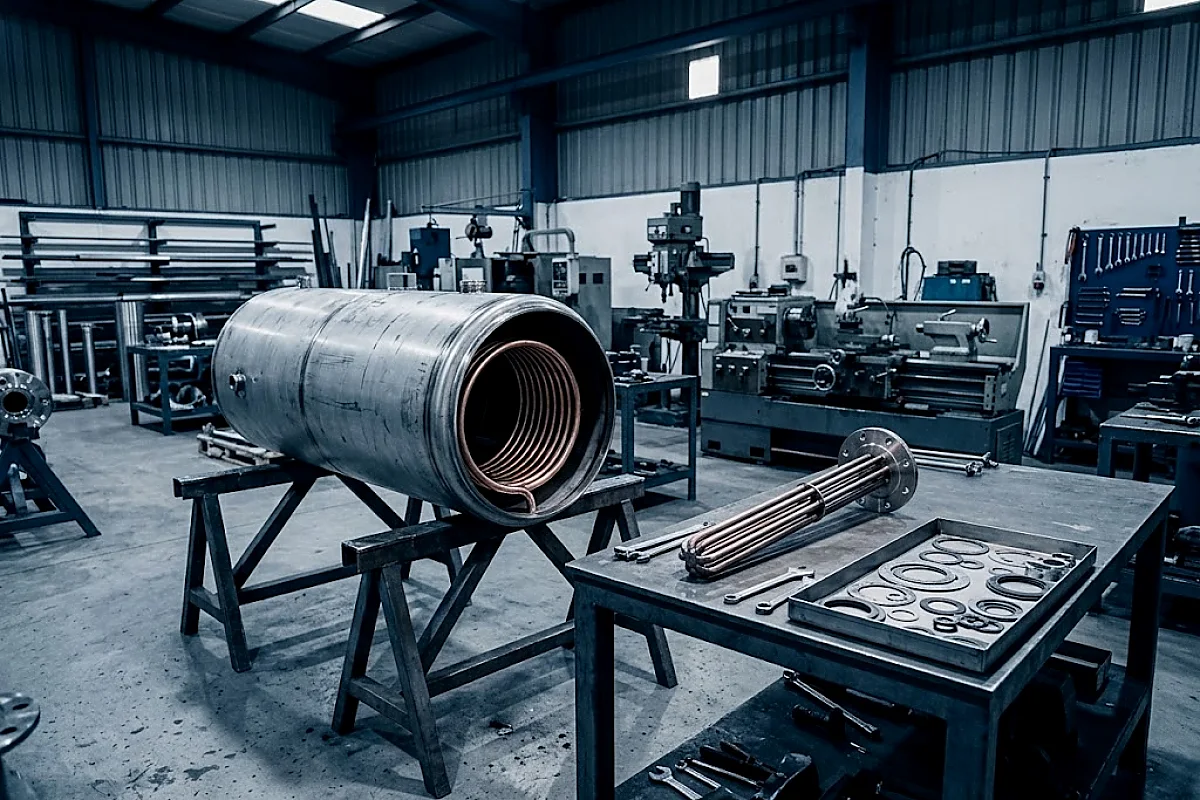
On vessels they heat fuel oil on its way to engines, boilers and burners, and serve heating and hot water loops. Ashore they sit in process lines, thermal fluid systems and hot water circuits in buildings and industrial plant across Dubai and Sharjah.
They also suit retrofits where there is no room for a storage vessel. A heated section of pipe takes far less space than a tank, provided the flow is steady and properly protected.
Fuel oil heating before engines, boilers and burners
Hot water circulating loops in buildings and plant rooms
Thermal fluid and glycol systems
Process fluid heating in line
Marine and offshore auxiliary systems
Retrofits where there is no space for a storage vessel
Marine
Offshore
Industrial plant
HVAC
Facilities
Quotation
What to send with your enquiry
Flow rate and the temperature rise you need are the two that matter most. The rest lets us size the vessel and the connections properly.
The fluid, and its inlet temperature
Flow rate, and the outlet temperature required
Supply voltage and phase
Connection sizes and type, and the direction of flow
Mounting orientation and the space available, including room to withdraw the bundle
How flow is proved, and what protection is already fitted
Photographs of the existing unit and pipework if this is a replacement
FAQs
Circulation heater questions
Related
Related manufacturing
The element bundles inside a circulation heater, and the storage alternative.
Request a quote
How much fluid, and how hot?
Those two, plus the fluid and the connections, are enough for us to size and price a unit. Workshop at Al Sajaa Industrial Area in Sharjah; we attend across Dubai and Sharjah.