Heating elements
Cartridge heaters, made to your bore
Insertion heaters manufactured in Sharjah for dies, moulds, platens and heated tooling — made to the hole you are fitting into, with the lead exit and sensor arrangement your machine needs.
Home › Services › Heating Elements › Cartridge Heaters
The product
What is a cartridge heater?
A cartridge heater is a compact cylindrical element that slides into a drilled hole in a block of metal and heats it from the inside. A resistance coil runs down the centre, insulated and compacted inside a metal shell, and the whole assembly is swaged so the heat passes straight out through the wall of the cartridge into the tool around it.
Because the heat has to cross the joint between the cartridge and the bore it sits in, the fit of that hole matters more than anything else about the installation. A cartridge in a close, clean bore transfers its heat into the metal. The same cartridge in a worn or oversized hole has an air gap around it, cannot shed its heat, and cooks itself from the inside.
We manufacture them to order — diameter, length, lead type and exit direction, and any built-in sensor are all specified against the tooling you are fitting them into, or copied from the cartridge that failed.
Construction
How a cartridge heater is built
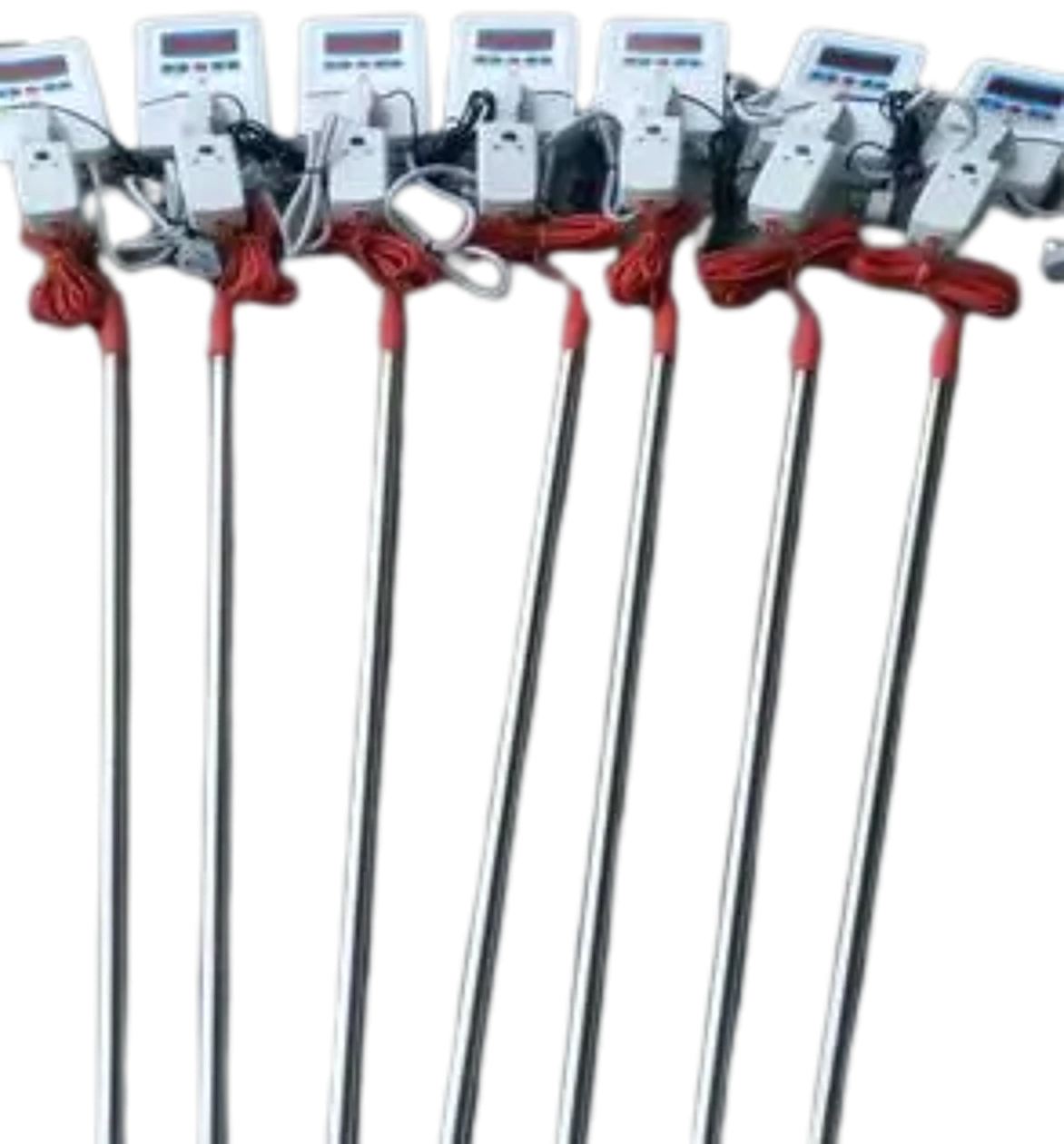
A cartridge is a dense element in a small space, which is why every part of it is specified rather than chosen from a range.
Resistance coil
— wound down the length of the cartridge and pitched for the wattage over the heated section
Compacted insulation
— packed tightly around the coil so heat moves outward to the shell and the coil stays electrically isolated
Swaged shell
— compressed onto the packing, which is what gives a cartridge its heat transfer and its density
Leads and exit
— flexible leads, braided or sleeved, exiting straight or at an angle to suit how the tool is assembled
Unheated ends
— where the element must not heat, so a mounting face or a lead exit is not sitting on the hot section
Built-in sensor
— a thermocouple inside the cartridge where the machine controls from the heater itself rather than from the tool
Made to order
Made to sample
Angled lead exit
Built-in thermocouple
Selection
How to select a cartridge heater
Cartridge failures come down to fit and to how hard the element is being worked. These are the decisions that determine both.
Bore fit
— the single most important detail. Measure the hole, not the old cartridge, because a bore that has been run hot for years may have opened up. A loose fit is the most common reason a cartridge burns out early.
Diameter and length
— including the heated length against the depth of the bore. A heated section extending past the metal it is meant to warm has nowhere to send its heat.
Watt density
— how hard the cartridge works. High density suits close-fitting bores in good condition; where the tooling is older or the fit is uncertain, easing the density buys life.
Lead exit and protection
— straight or angled, and whether the leads need braiding or sleeving against abrasion, oil or movement as the tool opens and closes.
Sensor position
— whether the machine controls from a thermocouple in the cartridge or from one in the tool, which changes how the heater behaves.
Removal
— cartridges seize in bores that have been run hot. If yours are difficult to change, say so and we will talk through fit and finish.
Applications
Where cartridge heaters are used
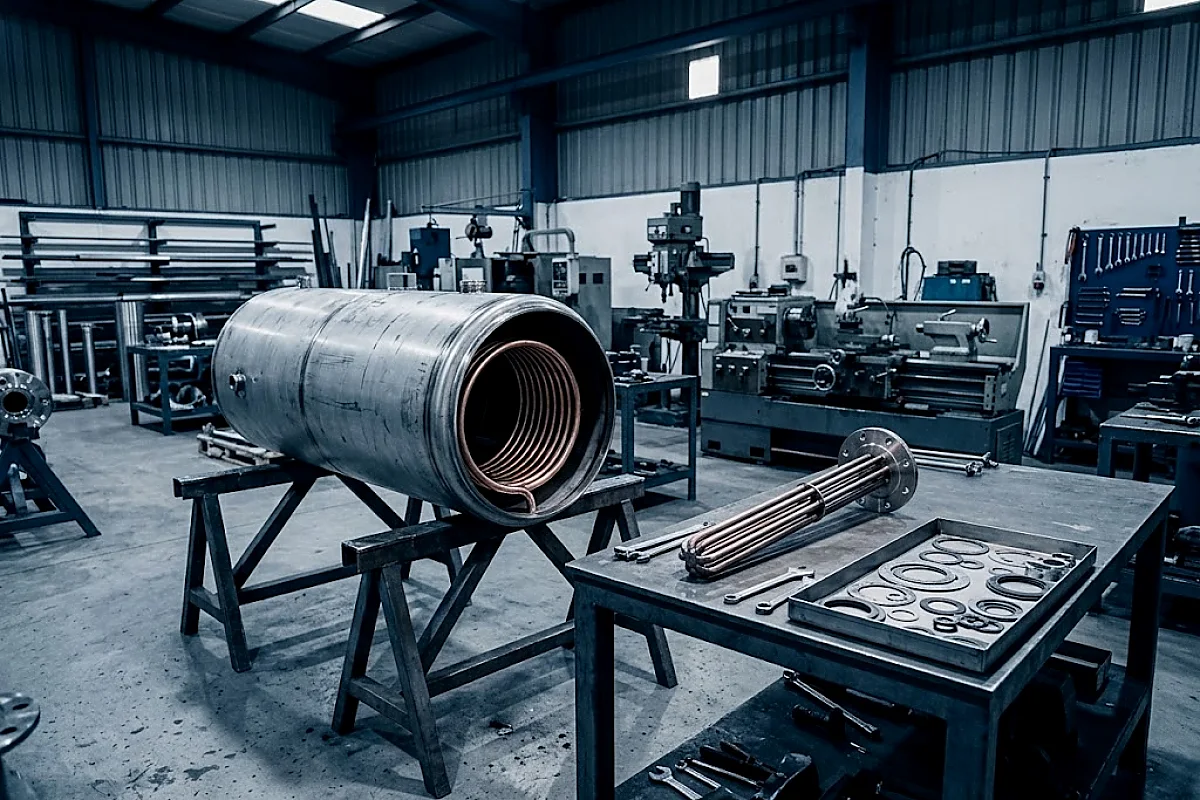
Wherever a block of metal has to be heated from the inside: injection and blow moulds, extrusion and sealing dies, platens, hot runner manifolds, packaging and sealing equipment, and heated tooling and fixtures on production machinery.
A good share of the work is replacement for machinery whose original supplier no longer stocks the part. The failed cartridge, plus a measurement of the bore, is enough to make a matching one.
Injection, blow and compression moulds
Extrusion and sealing dies
Platens and heated press tooling
Packaging, bagging and sealing equipment
Hot runner manifolds and nozzles
Obsolete replacements made from the failed cartridge
Plastics
Packaging
Industrial plant
Food processing
Manufacturing
Quotation
What to send with your enquiry
The failed cartridge and the bore measurement answer nearly everything. If you are specifying new tooling instead, these are the details we need.
Diameter and overall length, and the measured size of the bore
Supply voltage and wattage
Heated length, and any section that must stay unheated
Lead type, length and exit direction
Whether a built-in thermocouple is required, and which type
What the cartridge heats, and how the tool is controlled
Photographs of the failed cartridge and the tooling it fits
FAQs
Cartridge heater questions
Related
Related heating elements
Other element types for tooling and process heating.
Request a quote
Measure the hole, not the cartridge
Diameter, length, voltage and wattage are enough to quote from. Workshop at Al Sajaa Industrial Area in Sharjah; we attend across Dubai and Sharjah.