
Heating elements
Tubular heating elements, formed to your drawing
The base element behind most industrial heating: a sheathed resistance element, formed straight, into hairpins, spirals or rings, and manufactured in Sharjah to your voltage, wattage, length and mounting.
Home › Services › Heating Elements › Tubular Heating Elements
The product
What is a tubular heating element?
A tubular heating element is a resistance wire coil running down the centre of a metal tube, packed around with compacted magnesium oxide powder and sealed at both ends. The powder conducts heat outwards to the sheath while keeping the live wire electrically isolated from it, and the whole tube is then compacted and formed to shape.
It is the element almost every other type is built from. Put a bundle of them in a flange and you have a flanged immersion heater; wind fins along one and you have a finned air heater; braze them into a threaded plug and you have a screw plug heater. Understanding the tube itself is what makes the rest of the choices straightforward.
We manufacture them to order rather than stocking sizes. Diameter, overall and heated length, cold ends, bend form, sheath material, terminations and mounting are all specified for the job — from a drawing, from a written requirement, or from the element that failed.
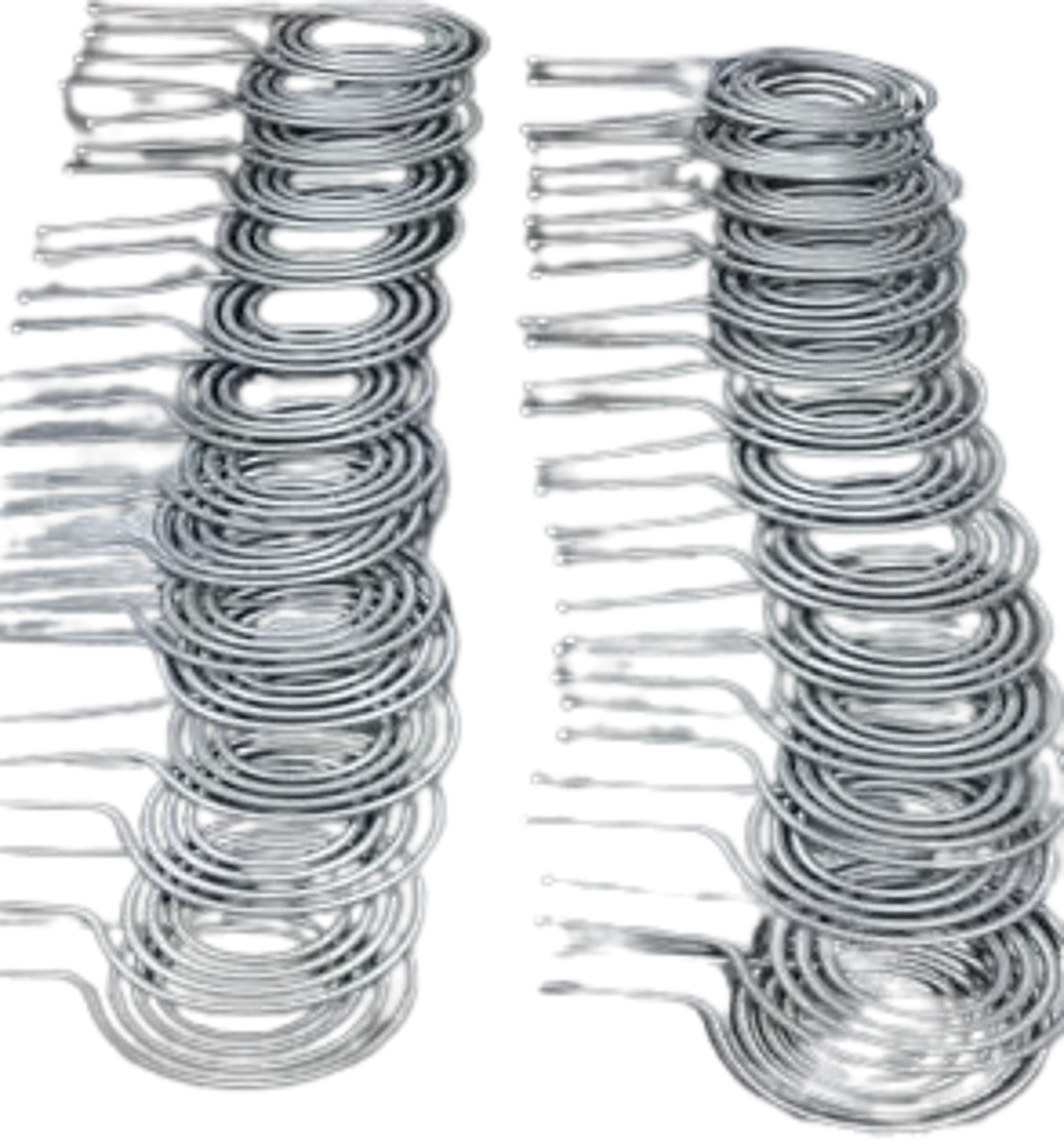
Construction
How a tubular element is made
Four parts decide how an element behaves and how long it lasts. Each is specified against the duty rather than taken from a standard range.
Resistance coil
— wound and pitched for the wattage required over the heated length, which is what sets how hard the element works
Magnesium oxide insulation
— compacted around the coil so it conducts heat to the sheath while keeping the element electrically isolated
Sheath
— the tube itself, chosen for what surrounds it in service: clean water, oil, air, or something more aggressive
Cold ends
— unheated lengths at each end so terminations, seals and mounting points are not sitting on a hot section
Terminations and seals
— studs, leads or flexible tails, with the end seal specified for whether the element works wet, damp or dry
Bend form
— straight, hairpin, coiled, spiral, ring, or formed around the shape of your equipment
Straight
Hairpin
Spiral
Ring
Formed to drawing
Selection
How to specify a tubular element
Two elements of identical wattage can behave completely differently depending on how that wattage is spread and what they sit in. These are the decisions that matter.
What surrounds it
— liquid, air, or a solid platen or mould. This sets the sheath material and puts a ceiling on how hard the element can be driven, and it should decide the specification before anything else does.
Watt density
— the wattage spread over the heated area. The same load on a shorter element works the sheath harder, runs it hotter and shortens its life. Where there is room, a longer element at lower density is the better buy.
Heated length against cold ends
— where the heat must start and stop. Getting this wrong puts heat into a seal, a mounting or a section that is meant to stay cool.
Diameter and bend radius
— a tube can only be formed so tightly for its diameter. Tell us the shape you need and we will tell you whether it can be made in one piece.
Wet, damp or dry service
— the end seal is specified for this. An element sealed for dry service will fail if it is run immersed or in a humid duct.
Terminations and mounting
— studs, leads or tails, and how the element is held. Copying the original saves fitting time on site.
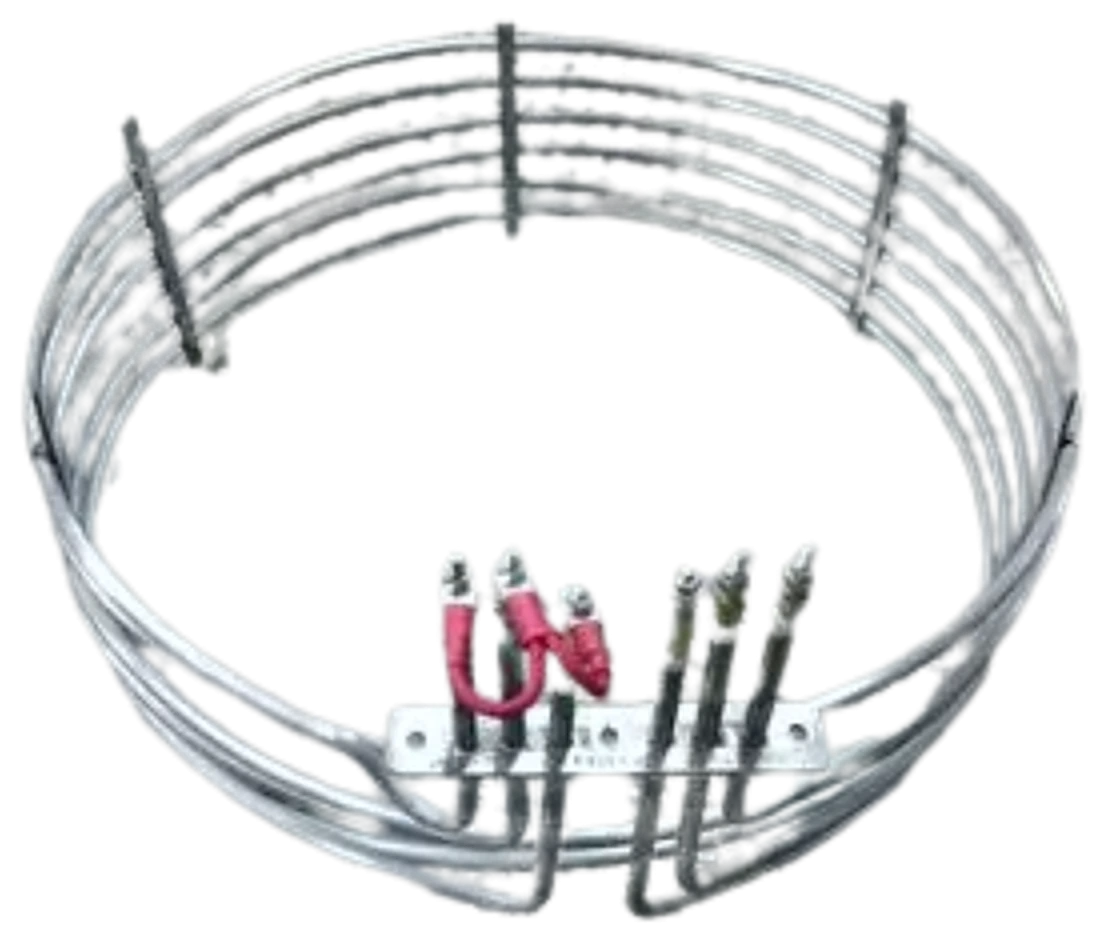
Applications
Where tubular elements are used
Tubular elements do the heating in most industrial plant one way or another — immersed in tanks and vessels, in the airstream of ducts and ovens, clamped to platens and moulds, or built into equipment as a replacement part that is no longer available.
Because they are formed rather than stocked, a large share of the work is making an element for equipment whose manufacturer has stopped supplying it. The old element is the drawing.
Immersed heating in tanks, vessels and calorifiers
Air heating in ducts, ovens, dryers and cabinets
Platen, mould and die heating on production equipment
Galley, laundry and catering equipment
Marine and offshore auxiliary heating
Obsolete replacement elements made from the failed original
Marine
Industrial plant
HVAC
Hotels
Food & laundry
Offshore
Quotation
What to send with your enquiry
The failed element answers nearly all of this, and it is the fastest route to a matching replacement. If you are specifying from scratch, these are the details we need.
Supply voltage, phase and wattage
Sheath diameter, overall length and heated length
The bend form — a sketch or a photograph against a rule is enough
What the element heats: liquid, air, or a solid surface
Termination type and mounting arrangement
Whether it works immersed, in a damp atmosphere, or dry
Photographs of the failed element and any nameplate
FAQs
Tubular heating element questions
Related
Related heating elements
The mountings and forms a tubular element is built into.
Request a quote
The old element is the best drawing there is
Voltage, wattage, lengths and the bend form are enough to quote from — or send the old element and we will measure it. Workshop at Al Sajaa Industrial Area in Sharjah; we attend across Dubai and Sharjah.