
Heating elements
Finned tubular and air heating elements
Finned and plain tubular elements for heating air — in ducts, air handling units, drying ovens, cabinets and space heaters. Formed and manufactured in Sharjah to the duct you have and the load you need.
Home › Services › Heating Elements › Finned Tubular & Air Heating Elements
The product
What is a finned tubular heater?
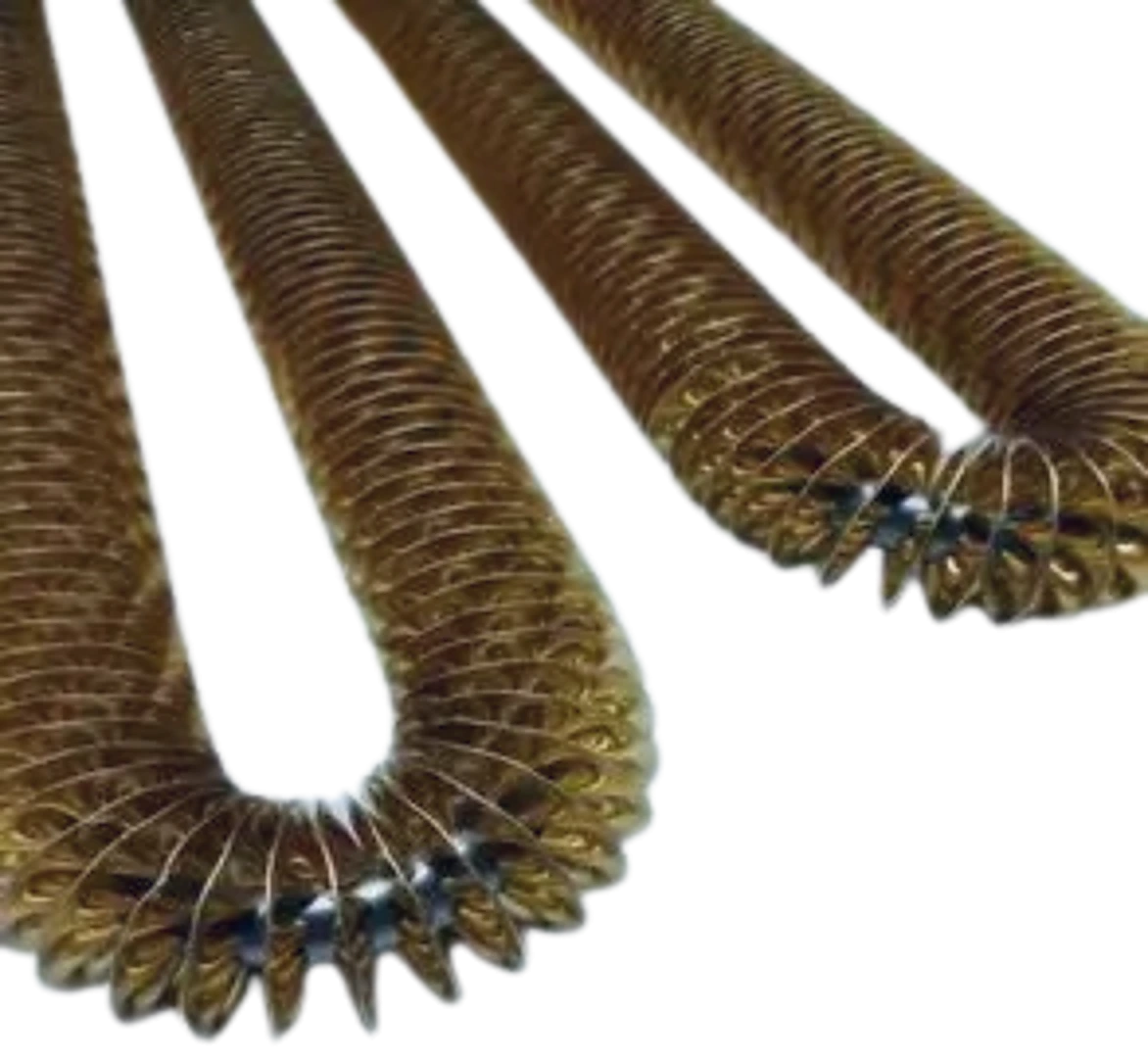
A finned tubular heater is a tubular heating element with metal fins wound or welded along its sheath. The fins multiply the surface area in contact with the air, so far more heat leaves the element for the same load — and the sheath itself runs cooler as a result.
The reason they exist is that air carries heat away far less readily than water or oil does. Put a plain element in moving air at the same load you would use in a tank and the sheath overheats, because the air cannot take the heat away fast enough. Fins solve that by spreading the same heat across a much larger area.
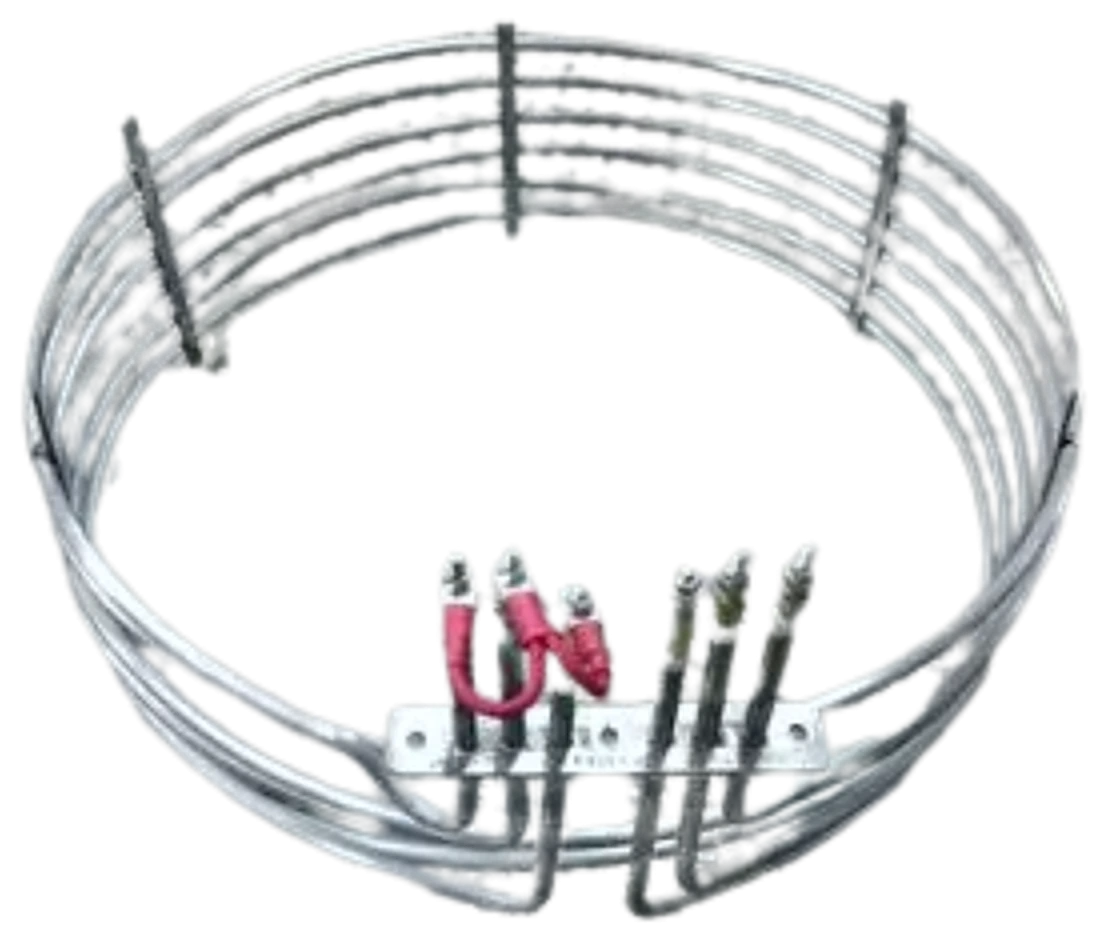
We manufacture both: finned elements where the air has to absorb a large load, and plain air tubular elements formed into rings, hairpins or frames where space, cleaning or the mounting makes fins impractical. Both are made to order — the form, the length, the sheath and the terminal arrangement follow your duct and your duty.
Construction
How air heating elements are built
The element, the fins and the way the assembly is mounted in the airstream all have to suit each other. These are the parts specified for each job.
Tubular element
— formed straight, into hairpins, into a ring or around the shape of the duct, so the heat is spread evenly across the airflow rather than concentrated in one place
Fins
— wound or welded along the sheath to increase the surface area, with the fin material chosen alongside the sheath for the air being heated
Sheath
— selected for the working temperature and for what is in the air: clean warm air, humid air and air carrying salt or process fumes are not the same duty
Mounting plate or frame
— made to the duct or housing so the assembly locates properly in the airstream and can be withdrawn for cleaning
Terminal enclosure
— positioned outside the hot airstream, and specified for where the unit is installed
Sensor and cut-out pockets
— for the control thermostat and, separately, for the over-temperature protection that an air heater needs
Made to order
Made to drawing
Made to sample
Formed to the duct
Selection
How to select an air heating element
Air heaters fail for different reasons than immersion heaters do, and almost all of them come back to airflow. These are the decisions that matter.
Airflow before anything else
— the volume and velocity of air passing the element is what carries the heat away. The same element that is comfortable in a fast airstream will overheat in a slow one at the same load.
Interlock with the fan
— an air heater energised with the fan stopped has nowhere to send its heat. An airflow switch or fan interlock, plus an independent over-temperature cut-out, is not an optional extra on this type of element. We will ask how yours is protected.
Finned or plain
— fins where the load is high for the airflow available. Plain elements where the air carries dust, grease or fibres that would pack between fins and insulate them.
Fin spacing against cleanliness
— closely spaced fins transfer more heat but clog faster in dirty air. In a kitchen, a laundry or a workshop extract, wider spacing or plain elements last considerably longer.
Duct size and mounting
— the dimensions the assembly has to fit, which side the terminals come out, and whether it has to withdraw for cleaning without dismantling the duct.
What is in the air
— humidity, salt, and process fumes all bear on the sheath and fin material. On marine and coastal plant this usually decides the specification.
Applications
Where air heating elements are used
Anywhere air has to be heated rather than water: air handling units and duct heater batteries in buildings, reheat coils for dehumidification, drying ovens and curing cabinets, and space and frost protection heating in plant rooms and stores.
On vessels and offshore they go into accommodation and engine room HVAC, and into cabinet and enclosure heating where condensation is the real enemy. For panel anti-condensation specifically, a mica strip heater is often the better fit, and we make those too.
Duct heater batteries and air handling units
Reheat after cooling, for humidity control
Drying ovens, curing cabinets and process dryers
Space heating and frost protection in plant rooms and stores
Marine and offshore accommodation and engine room HVAC
Enclosure and cabinet heating against condensation
HVAC
Marine
Offshore
Industrial plant
Facilities
Food & laundry
Quotation
What to send with your enquiry
A photograph of the existing assembly in its duct answers most of this. Failing that, these are the details we need to specify and price one.
Supply voltage, phase and the load required
Duct or housing dimensions, and the space available for the assembly
Airflow, if you know it — or the fan duty and duct size so we can work from that
Whether the element is finned or plain now, and how it is mounted
What is in the air: humidity, salt, dust, grease or process fumes
How the heater is controlled and protected, including any airflow interlock
Photographs of the failed element, the mounting plate and the terminal box
FAQs
Finned tubular and air heater questions
Related
Related heating elements
Other element types for air, enclosures and liquid duties.
Request a quote
How much air, and how fast?
Tell us the duct, the duty and how the heater is protected, and we will come back with a specification and a price. Workshop at Al Sajaa Industrial Area in Sharjah; we attend across Dubai and Sharjah.