Switchgear & control panels
Control Panel & Switchgear Manufacturing in the UAE
Marine switchgear, distribution boards, motor control and starter panels, frequency control units, engine control and temperature control panels — built to your schedule and single-line diagram, or engineered from the equipment when no drawing survives.
The service
What separates a panel that lasts from one that gives trouble
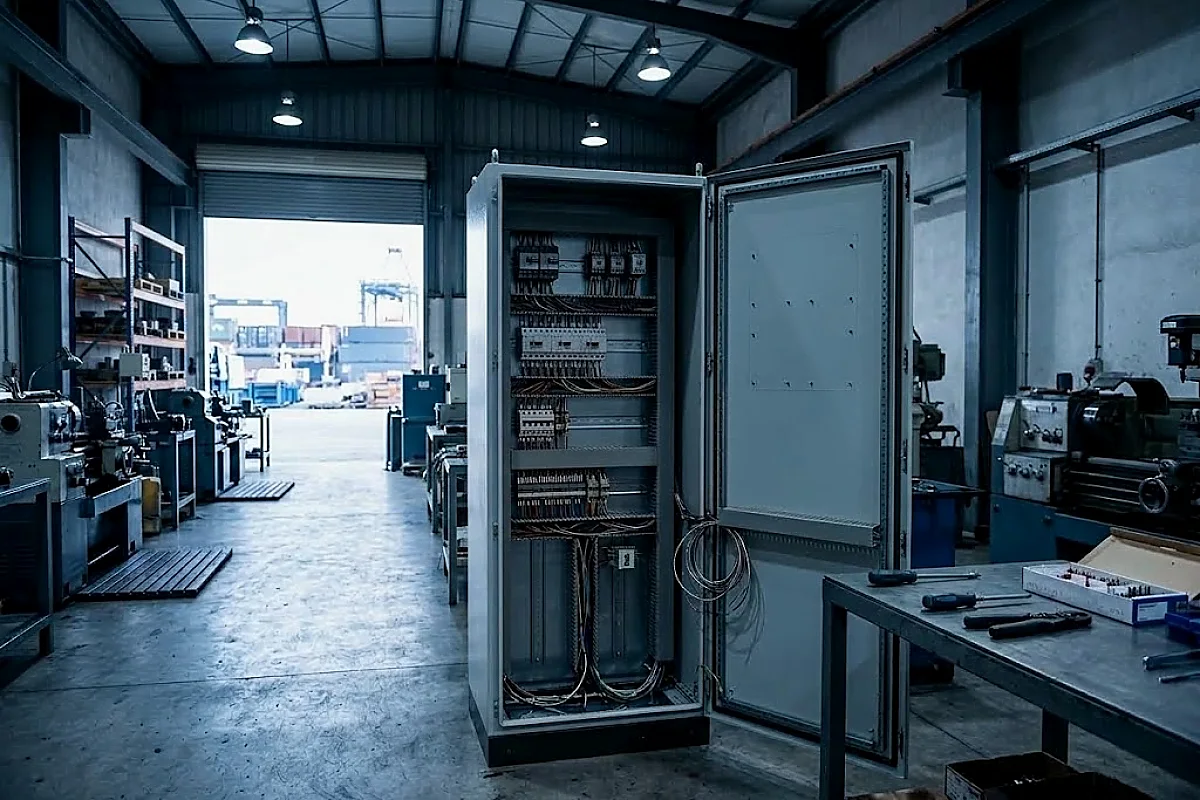
Panels are assembled from the same components everywhere. What differs is how they are specified and how they are built: the enclosure rating and material chosen for the environment rather than the price list, components sized for the real duty and starting current rather than the nameplate minimum, and an internal layout that lets heat out, cable in, and a technician reach a terminal without disturbing three others.
We build from a client load schedule and single-line diagram, and we engineer the panel from the operating requirement where no drawing survives — the usual case on a replacement panel for equipment that has been modified over twenty years of service. Panels are labelled, tested and handed over with a wiring record that still makes sense to whoever opens the door in five years, which is the difference between a fault found in an hour and a fault traced over a shift.
Marine and engine room panels are built for heat, salt air and vibration; plant room and HVAC panels for ambient temperature, dust and access. Where the circuit includes heating, the elements and calorifiers are manufactured by the same company, and where it drives a motor, that motor can be rewound and balanced in the same workshop.
Back to all services →In short
What is a control panel manufacturer?
A control panel manufacturer builds the enclosures that switch, protect and control electrical equipment — the busbars, breakers, contactors, starters and wiring assembled into a panel and tested before it leaves. Panels are built to a load schedule or single-line diagram rather than bought as a standard unit.
Because the panel is made rather than selected, the enclosure, the rating, the layout and the protection are set around the equipment it will run and the space it has to go into.
Panels are built alongside the motors, elements and pumps they control — see about Best Anchor Marine Services.
Scope of work
Panels and switchgear we build
Power distribution, motor control and temperature regulation for vessels and industrial plant, built to the schedule you hold or worked up from the equipment itself.
Marine switchgear
— main and emergency distribution for vessels and offshore support craft
Power distribution boards
— for plant, workshops, plant rooms and building services
Motor control panels and starters
— direct-on-line, star-delta and soft start, matched to the motor and its duty
Frequency control units
— variable speed drive panels where speed control is part of the requirement
Engine control panels
— for main and auxiliary engines and generator sets
Temperature control panels
— for heating circuits, calorifiers and process equipment
HVAC switchgear
— chiller, AHU, pump and plant room control
Industrial control panels
— built around the process the equipment actually runs
Marine switchgear
Distribution boards
Motor control & starters
Frequency control units
Engine control
Temperature control
HVAC panels
When to call us
When a panel needs rebuilding rather than another repair
Panels rarely fail without warning. These are the conditions that turn a maintenance item into a replacement, and what each one costs if it is left.
Heat discolouration on terminals or busbar
— loose connections or undersized components running hot
Nuisance tripping that moves around the board
— protection no longer matched to the load it now carries
Condensation and corrosion inside the enclosure
— wrong IP rating for the location, or a failed anti-condensation heater
Obsolete breakers and contactors
— spares no longer available, so every fault becomes a long outage
Wiring that no longer matches any drawing
— years of modifications with nothing recorded
Equipment added since the panel was built
— loads the original schedule never anticipated
A starter that struggles on every start
— starting method or sizing wrong for the motor and its load
Damage from vibration or salt in an engine room
— enclosure and components specified for a gentler environment
How the work runs
From schedule to commissioned panel
Where a drawing exists we build to it. Where one does not, the first stage is establishing what the equipment actually needs the panel to do — which is engineering, not guesswork.
01
Requirement and load schedule
We work from your schedule and single-line diagram, or from the equipment, its ratings, its starting method and how it is operated where no drawing exists.
02
Specification
Enclosure rating and material, component selection, protection and internal layout are set for the environment the panel will live in and the fault levels it has to handle.
03
Build and wiring
The panel is assembled, wired, ferruled and labelled, with the layout arranged for heat dissipation and access rather than only for the shortest cable run.
04
Testing
Insulation resistance and function testing are carried out before despatch, with the wiring record and labelling handed over alongside the panel.
05
Installation and commissioning
Where required, the panel is installed and commissioned on board or on site with the equipment it controls, and the changeover planned around your outage window.
Applications
One contractor for the panel and what it feeds
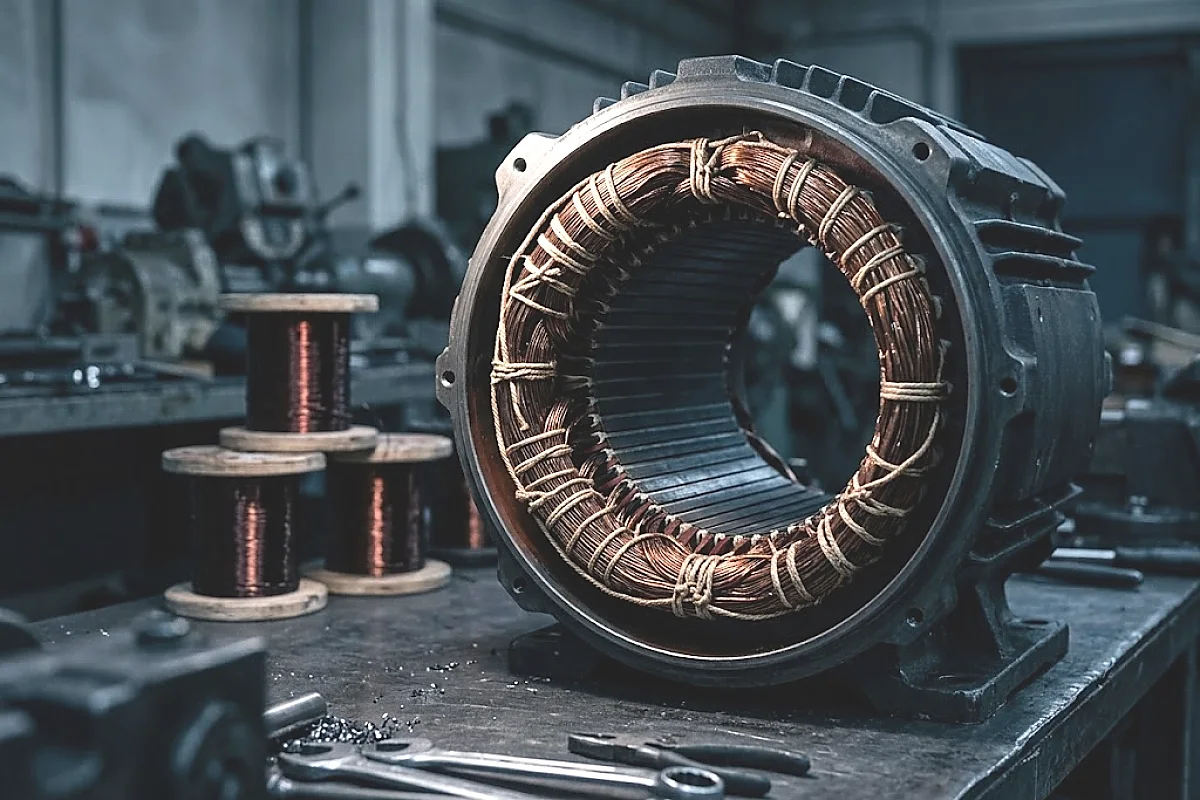
A heating circuit that keeps tripping might be the element, the contactor, the thermostat or the winding it feeds. Diagnosed by one team it is a single job with one invoice. Split across three suppliers it becomes three attendances and nobody's responsibility. Because we rewind motors, manufacture heating elements and build the panels that control them, the diagnosis does not stop at a trade boundary.
Frequency control units and starter panels are matched to the motor they drive, which is straightforward when the motor data is already on file from a rewind carried out in the same workshop — and when the panel and the machine are commissioned together rather than by two contractors on different days.
Vessels, offshore support craft, tugs and shipyard equipment
Engine rooms, generator installations and emergency switchboards
Chiller plant, AHUs, pump sets and plant room equipment
Heating circuits, calorifiers and process temperature control
Industrial plant, workshops, water treatment and building services
Ship owners & managers
Shipyards
HVAC contractors
Hotels & facilities
Industrial plant
Water treatment
Electrical contractors
Before you enquire
What to send with a control panel enquiry
A replacement panel is far easier to price from photographs of the existing installation than from a description of it — inside and outside, with the door open.
Schedule or single-line diagram
— if one exists, even an out-of-date one
Supply details
— voltage, phase, frequency and available fault level where you know it
Equipment controlled
— ratings, starting method, duty cycle and how it is operated
Enclosure requirements
— IP rating, material, mounting arrangement and space available
Location and conditions
— engine room, deck, plant room or workshop, and the heat, salt and dust it faces
FAQs
Switchgear and control panel questions
Related services
Work that often runs alongside this
Panels are usually specified alongside the equipment they control. These are the services quoted with them most often.
Request a quote
Start with the load schedule
We will confirm what can be built, what it costs, and what information is still needed to specify it properly. Send the load schedule or the photographs and we will work from there.